Most reviewed
The standard day
Pass, train and bridge
- From$79
- At the pass2 hours
- Reviews1,244 reviews
Decision guide
Two questions, one answer
Tell us how you feel about long hot days and what you want from the visit, and a version of the trip appears with its starting price.
Best match for you
from $79
2 hours at the pass, then the train, the bridge, the railway museum and the cemetery.
Best match for you
from $161
11 hours with a group of your own and a guide in English.
Best match for you
from $225
The memorial, the train and the river over 2 days, with a night on a floating hotel.
Best match for you
from $48
A 10 hour day for the bridge and a basic train fare, with no pass stop listed.
Hellfire Pass asks for a long drive, a hot walk and an hour of quiet. Weigh the ratings, the effort and the alternatives to decide whether the Death Railway day is worth your time.
Editorial team, hellfirepasstour.quest · Updated November 12, 2026 · 6 min reading time
Main facts
Yes, for the right reader, and the price of the answer is time. Hellfire Pass is a quiet rock cutting reached by a long drive, and it rewards people who want to stand where the railway was built more than people who want an easy sight. Admission is free, and the audio guide makes a forest path a spoken record of the work.2,3
The numbers behind the opinion are consistent. The tour sold here has gathered 1,244 reviews averaging 4.6, and the Centre shows a Google score of 4.5 from 2,404 reviews.1 Over 166,000 people came to its trail and museum in 2025.4 That is a large crowd for a place far from town, and it suggests the long trip is something many people decide is worth making.
The recognition is older than the reviews. In 2014 the Tourism Authority of Thailand reported that the museum had been named the top museum in Thailand and fifth in Asia in a TripAdvisor Travellers' Choice listing.5 That was a popularity award based on traveller reviews, not an official ranking, so treat it as a sign of long-running approval. The caveat to keep in mind is the day around the visit, which is long and hot.
The verdict
| Traveller | Verdict | Why |
|---|---|---|
| History reader | Go | The cutting is a memorial kept as it was9 |
| Family of a veteran | Go | Over 60,000 prisoners worked on the line17 |
| Photo fan | Maybe | The bridge is busier than the pass18 |
| Low tolerance for heat | Go in the cool season | April highs reach 38 degrees8 |
| Short on time | A River Kwai day | The history day lists no pass |
| Limited mobility | Ask for the buggy | A free golf buggy serves the cutting19 |
A guide to weighing the day, drawn from the Centre's own pages, the listings and the nearest weather station.1
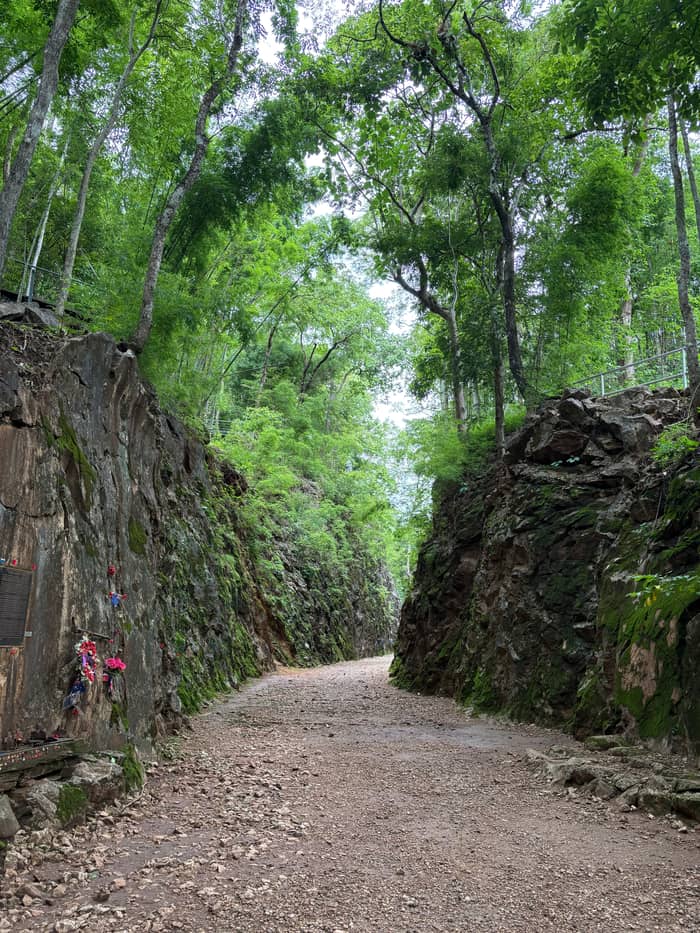
Think of the museum as a doorway. Its own description is audio guides carrying survivor stories along trails cut by the labourers of the Pass, and that is the whole idea.9 The exhibition is small, about 200 square metres by the tourism authority's count,10 so little of the experience is about looking at displays. What stays with you is the walk down to the cutting, where the rock closes in and the voice in your ear says what the men did there.
A shorter route heads to the memorial in roughly an hour, which makes the core of the visit brief.11 Beyond the cutting the long trail adds 2.6 km each way, with smaller cuttings, a big embankment and sites where trestle bridges once carried the line.12,13 That route asks for a safety radio and good fitness, and it shows how much of the railway was shaped by hand.14
Atmosphere depends on timing, and early hours are cooler and calmer than the afternoon.15 On 25 April the dawn service draws people from all over the world,16 which is moving if you are there for it and a poor choice for an ordinary visit. A weekday gives you the cutting almost to yourself, and the place rewards the quiet it asks for.
What reviewers give
The site's own Google rating, then four tour ratings as the listings show them; the counts behind them differ from 128 to 2,404.1
The big choice on a Death Railway tour is whether the pass belongs in the day at all. The River Kwai history day, from $48, fills 10 hours with about 3 hours of travel each way and no pass in its record. The standard pass day from $79 needs 3.5 hours of driving before the cutting, gives the cutting 2 hours and then adds the train, the bridge, a museum and the cemetery.
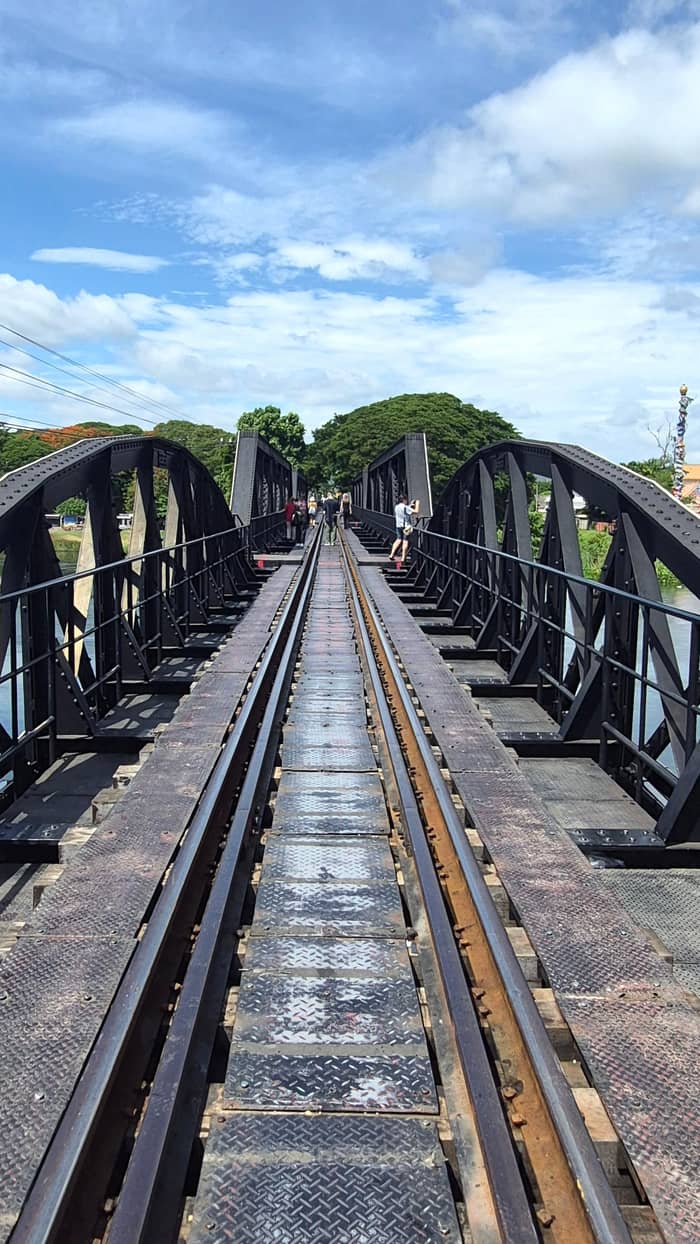
The two days teach different things. British prisoners built the steel bridge in 1942 and 1943 from material brought from Java, and today it draws visitors to market stalls and a short train ride across.20,18 The film that made it famous looks nothing like the real bridge.21 The pass offers the opposite experience: a rock cutting kept as a memorial, reached on foot, with the work still visible in the walls.
If you only have time for one, the pass gives the stronger sense of the labour, and the bridge gives the stronger sense of the line as a route. The standard day covers both, which is why it is the sensible default. Should you choose the shorter river day, plan to come back for the pass by red bus or car from Kanchanaburi, and see the museum page for how that visit works.
Pick your version
Most reviewed
Pass, train and bridge
Slowest
A night on the river
Lowest from price
Bridge and museums
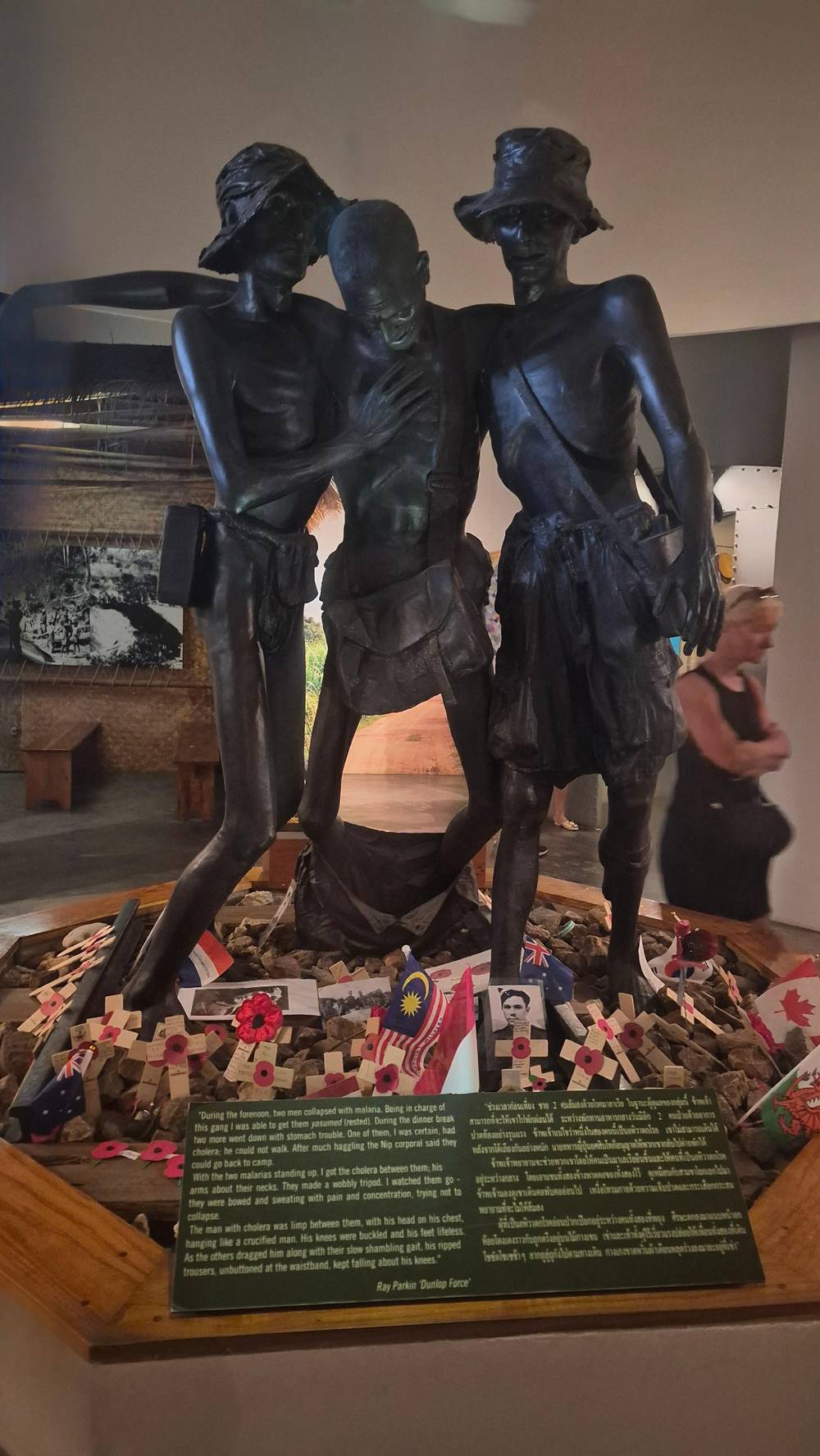
Readers of history and relatives of those who served get the most from it. The Centre's own totals run to more than 60,000 Allied prisoners on the line, about 13,000 of them Australian, with one in 5 prisoners and almost half the Asian labourers dying.17,26 The place exists to keep those stories alive on the ground where they happened.9
People who dislike long drives, wilt in heat or cannot manage steps may find it hard going. Climbs are steep and rough on the trail, and the walk to Hintok Road has hardly any shelter.27,28 The Centre does lend a free golf buggy to visitors with limited mobility, which keeps the memorial within reach.19 Anyone who wants only photographs of a famous bridge would be better served by a River Kwai day.
Children can manage the short walk if they are used to heat, though the subject is heavy and the van ride is long. Judge by the child, not the age. Teenagers studying the war often get more from the day than adults expect, particularly with the audio guide. If your group is mixed, a private day lets you shorten the walk or lengthen the stops, which a shared tour cannot do.
Compare costs
Add your party size and each version is priced for the group.
Compare all 4 options
Add your party size and each version is priced for the group.
≈
View≈
View≈
View≈
ViewStarting prices from GetYourGuide, converted at the ECB reference rate. You will see the exact price when booking.
A year at the pass
1 January
The Centre closes on 1 January.6
13 to 15 April
The Centre closes for the Songkran festival from 13 to 15 April.6
25 April
The service has been held on 25 April since 1998.7
Early May
The Centre is shut for maintenance in weeks 1 to 3 of May.6
Nov to Feb
December averages 31.8 degrees and 9 mm of rain.8
24 to 31 December
Closed in late December and on New Year's Day.6
Two hours at the pass means the long trail is out, since walking it there and back takes around 3 hours.12 The early-morning stillness goes too, because a 3.5 hour van ride after a dawn pickup reaches the Centre well after it opens. The cutting itself stays closed to walkers until 09:00, so the advantage of an early arrival is modest.29
A second loss is time in Kanchanaburi. The railway museum receives 40 minutes and the cemetery 20, enough to see them and too little to take them in. In town the Thailand-Burma Railway Centre alone has 8 main galleries and a long relief model of the route.30,31 A night in Kanchanaburi would give those places the hours they deserve.
The 2 day floating hotel trip answers both problems, starting from $225. Its stops include the Hellfire Pass Memorial, and it spreads the visit across 2 days. It costs more than the standard day and asks for earlier cancellation, 5 days rather than 24 hours, but it removes the rush. For the keenest history readers it is the answer to the worth-it question, if the days can be spared.
Video
An American In Bangkok on YouTube · Video data is requested only when you tap play.
This local Anzac tradition begun in 1998, now draws people from all over the world.
Make it worth it
Heat is the main practical risk. The nearest station's average daily high reaches 38 degrees in April and stays above 33 degrees from January to October, while December averages 31.8 degrees with only 9 mm of rain.8,8,8 The cooler months from November to February are the kinder choice, and September, at 249 mm, is the wettest month.8
A Death Railway visit pays back the effort if you prepare. The Centre advises sturdy shoes with grip, plenty of water, sunscreen and repellent, and notes that rain turns the path slippery.32,23,33,24 Take the audio guide onto the trail and give it the first stop, because the stories turn the walk into a visit rather than a stroll.
Look up the closure calendar before you book. The Centre's closure calendar names 1 January, the Songkran days from 13 to 15 April, the maintenance weeks of early May, 5 December and the last days of the year.6 When the gate is shut the tour listing swaps in Chong Kai Mountain, a viewpoint rather than the pass, so a closed day changes the value of the trip. Choose a date outside those windows if the pass is why you are going.
FAQ
The tour averages 4.6 from 1,244 reviews and entry to the site is free.2
The van alone takes 3.5 hours before the pass, so go prepared.
The bridge has market stalls and visitors can ride the train across it.18
The standard day adds the bridge, while the history day from $48 lists no pass.
The standard listing names Chong Kai Mountain as the alternative on closed dates.
Sources
Planning a day at Hellfire Pass? Ask a real person here.