Shared day
Shared, with the pass
Train, bridge and museum
- StopsPass, train, bridge, museum
- GroupPrivate or small groups
- CancelUp to 24 hours before
Where is your stop
Kanchanaburi River Kwai & Hellfire Pass Private Tour
★ 4.8 · 128 reviews so far
View 14 stops
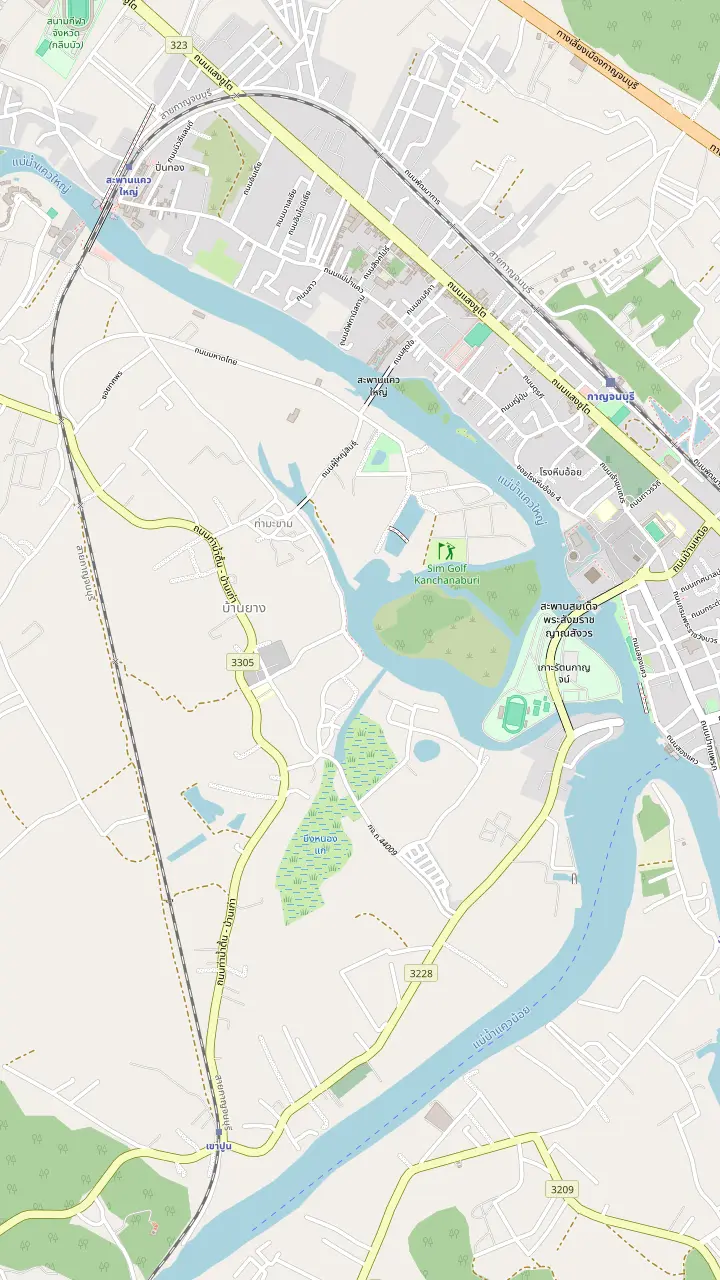
Choose a route and tap a pin or stop to see its note and open it in Google Maps.
The steel bridge over the Khwae Yai, with the town's wartime museum beside it.
Google MapsThe museum on Maenam Khwae Road a few steps from the bridge.
Google MapsThe town station, a short walk from the war cemetery and the railway museum.
Google MapsThe Thailand-Burma Railway Centre, on the west side of the war cemetery.
Google MapsThe Commonwealth cemetery at Don Rak, beside Saeng Chuto Road.
Google MapsThe cemetery on the Khwae Noi, laid out on the site of a wartime camp and hospital.
Google Maps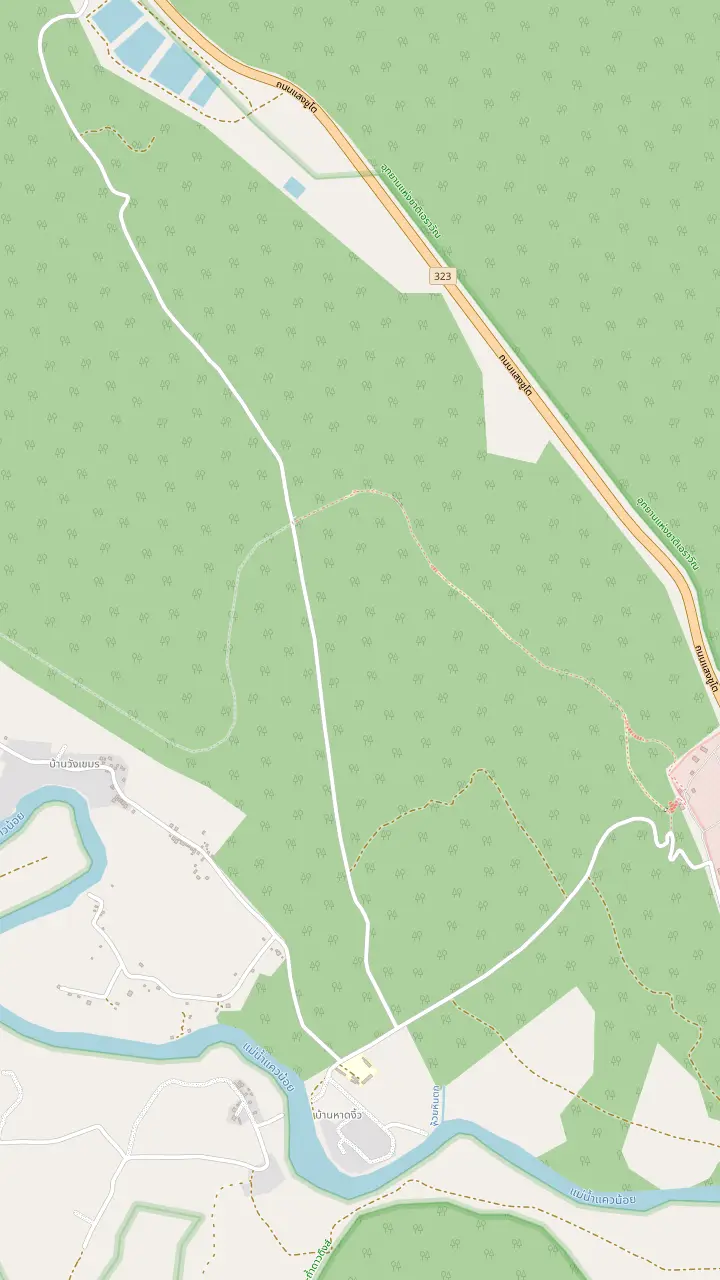
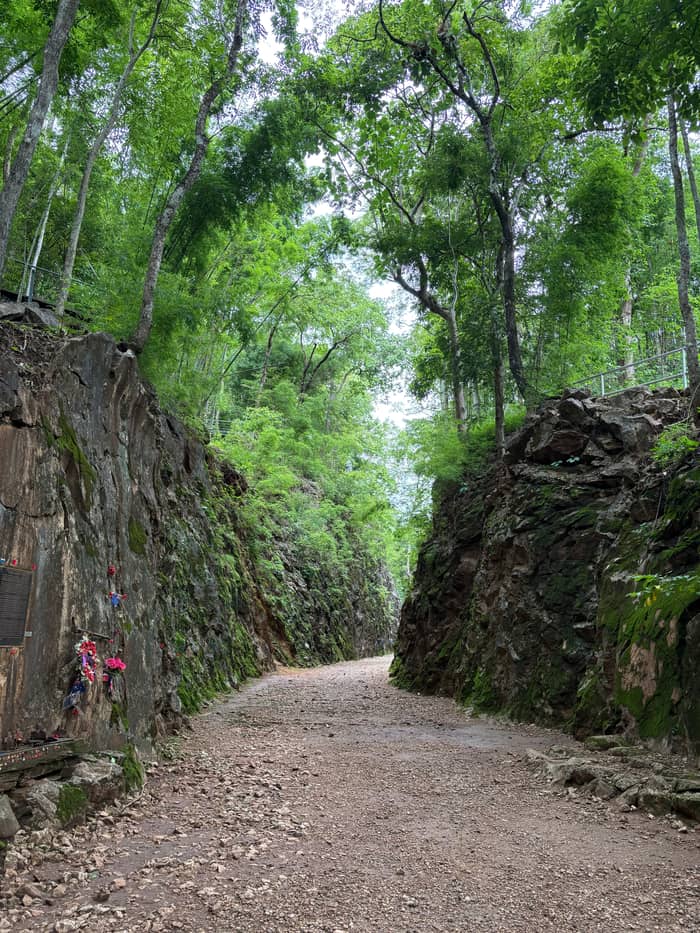
The Konyu Cutting, where the memorial trail begins beside the Interpretive Centre.
Google MapsThe site of a wartime camp on the river below the cuttings, further along the line.
Google MapsThe village near the end of the memorial trail, on the road north of the pass.
Google Maps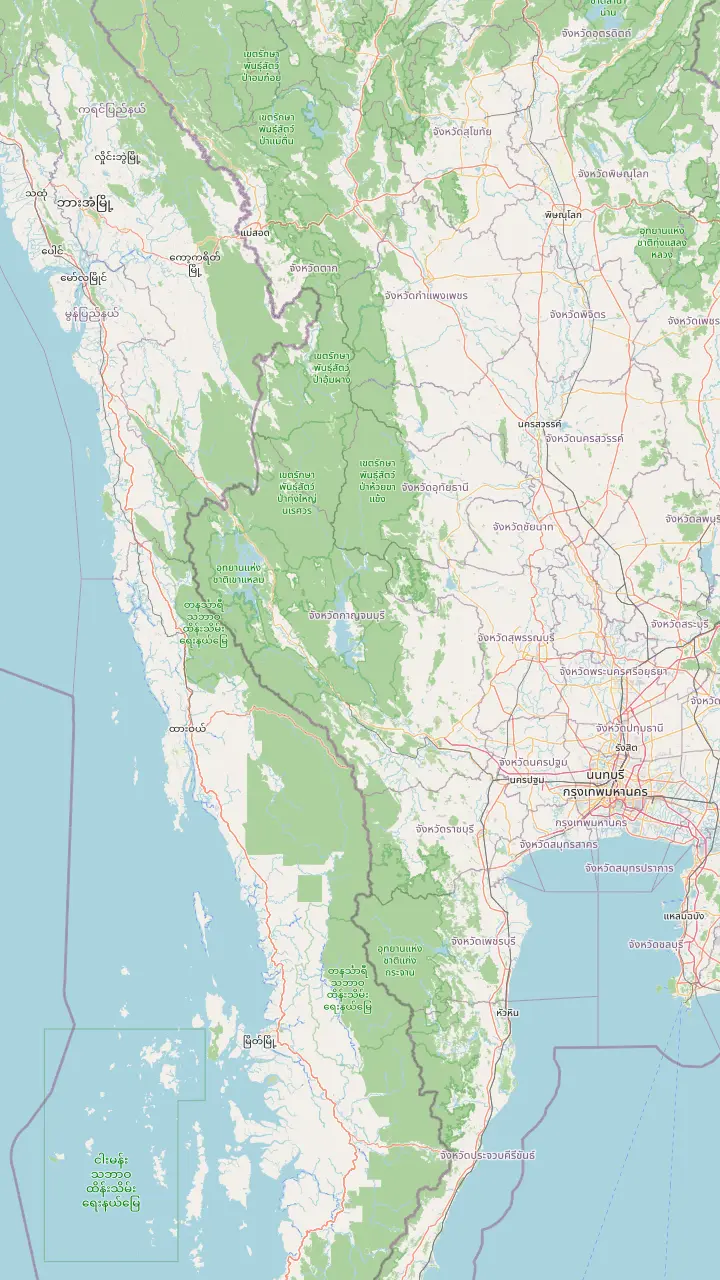
Where the Death Railway leaves the Thai main line.
Google MapsThe town station, a short walk from the war cemetery and the railway museum.
Google MapsThe steel bridge over the Khwae Yai, with the town's wartime museum beside it.
Google MapsThe timber viaduct hugging the cliff above the Khwae Noi, known in wartime as Wampo.
Google MapsThe end of the line that still runs, where the tourist trains turn round.
Google MapsThe Konyu Cutting, where the memorial trail begins beside the Interpretive Centre.
Google MapsThe border crossing in the Tenasserim hills, far beyond the working line.
Google Maps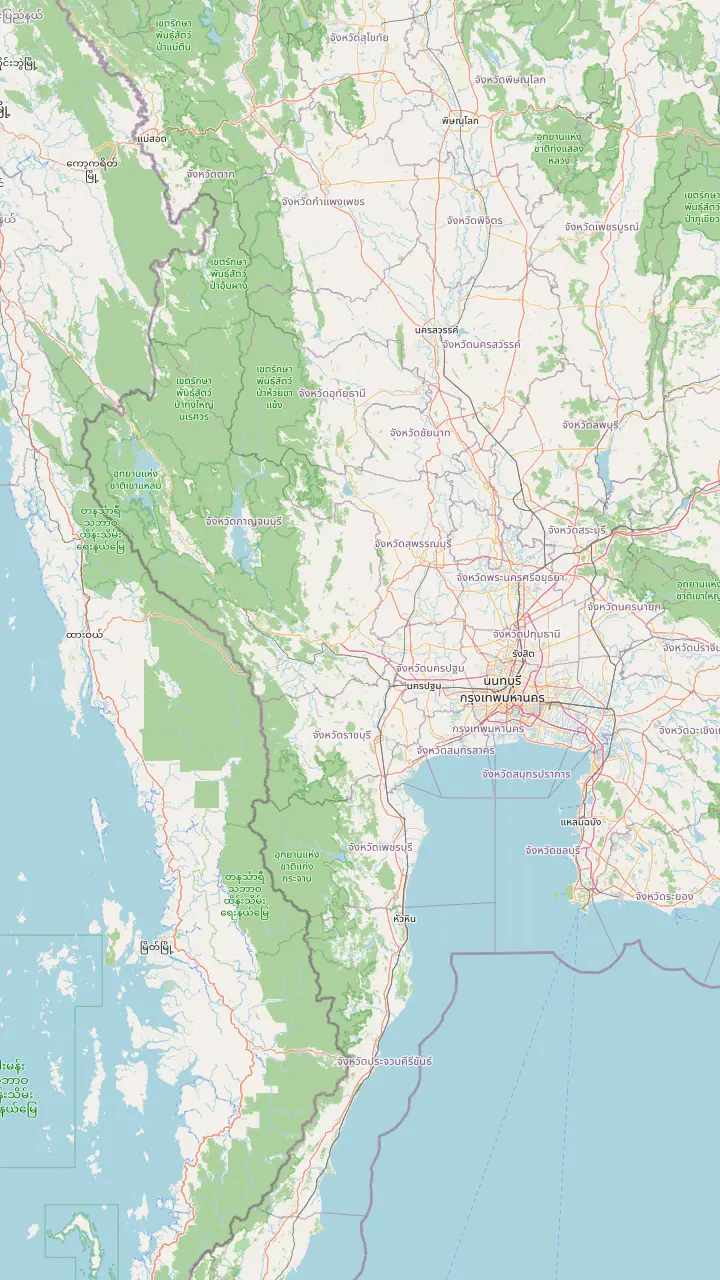
Bangkok Noi, the Thonburi terminus of the Nam Tok trains.
Google MapsWhere the Death Railway leaves the Thai main line.
Google MapsThe town station, a short walk from the war cemetery and the railway museum.
Google MapsThe steel bridge over the Khwae Yai, with the town's wartime museum beside it.
Google MapsThe end of the line that still runs, where the tourist trains turn round.
Google MapsThe Konyu Cutting, where the memorial trail begins beside the Interpretive Centre.
Google MapsMap data: © OpenStreetMap contributors
A River Kwai and Hellfire Pass tour spends half its day in Kanchanaburi town. This guide explains the bridge and the film behind its fame, the museums, the war cemeteries and how the stops fit around the pass.
Editorial team, hellfirepasstour.quest · Updated November 12, 2026 · 7 min reading time
Main facts
A River Kwai and Hellfire Pass tour has a town half and a hills half, and they sit about 80 km apart.6 The town half is the bridge, the museums and the cemeteries of Kanchanaburi, and the hills half is the memorial and trail at Hellfire Pass, about an hour by road from the town.6 Operators join them into a single long day from Bangkok.
A listing on this site shows the pattern: a van of 3.5 hours, 2 hours at the Hellfire Pass memorial museum and walking trail, a lunch stop of 50 minutes, a train ride of 1.5 hours, the Bridge Over the River Kwai, 40 minutes at the railway museum in Kanchanaburi and 20 minutes at the war cemetery. A private listing adds the JEATH War Museum and free time at the river.
This page covers the town stops, and it is also where an Erawan falls, Death Railway and River Kwai bridge tour search lands, so the Erawan park is only mentioned later. The hills half, the cutting and its trail, has its own guide, and so does the train. Reading them together gives you the full outline of what the day contains, and it helps you decide whether a single long day is enough or whether a night in Kanchanaburi would suit you better.
The town stops
| Stop | What it is | Source |
|---|---|---|
| River Kwai bridge | Built in 1942 and 1943 with 11 steel spans1 | Anzac Portal |
| Railway Centre | Museum with 8 main galleries, open 9:00am to 4:00pm12,4 | Railway Centre |
| Kanchanaburi cemetery | Commonwealth cemetery near the station13 | Anzac Portal |
| Chungkai cemetery | Along the Kwae Noi, south-west of the junction14 | Anzac Portal |
| Japanese memorial | Built in early 1944 in Kanchanaburi15 | Anzac Portal |
The town of Kanchanaburi is 135 km west of Bangkok by the Tourism Authority of Thailand's figure.16
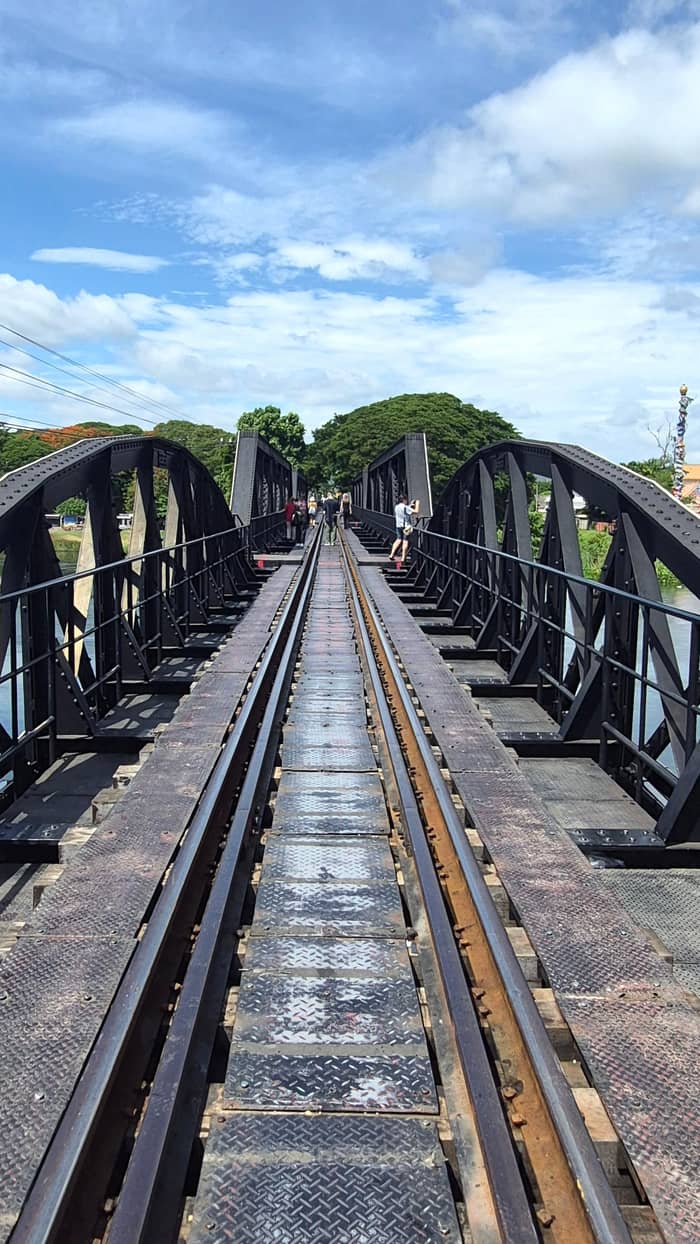
The bridge spans the Kwae Yai river in Kanchanaburi. It was built in 1942 and 1943 by British prisoners of war based at Tha Markam, and it had 11 steel spans on concrete pillars.1 It was the only steel bridge the Japanese built in Thailand, and its materials were taken from an existing bridge in Java, in what was then the Netherlands East Indies.1,11
Its fame comes from fiction. The 1957 film by David Lean won 7 Oscars, and tourists flocked to Thailand searching for the bridge, although the film's bridge bears no resemblance to the steel bridge at Kanchanaburi.3 The film plot is entirely fictional, and the officer at its centre was reportedly modelled on Philip Toosey, the British colonel at Tha Markam.2
The river name is a product of the fame too. The town of Kanchanaburi renamed the Mae Klong river near the bridge as the Kwae Yai in 1960, and so the Bridge on the River Kwai was created.9 It is a useful reminder when you read old maps. The history behind the structure is real, and the film is the reason most people have heard of it.
Time on the shared day
The shared listing gives 2 hours at the pass, 1.5 hours on the train, 50 minutes for lunch, 40 minutes at the railway museum and 20 minutes at the cemetery.
Allied aircraft regularly bombed the bridges from December 1944 to June 1945, and several spans of the steel bridge were destroyed.7 About 100 m downstream a wooden bridge that had carried light rail trucks was easier to repair and partly filled the gap.7 The raids also killed prisoners at the camp near the bridge. On 29 November 1944 the heaviest raid killed 19 prisoners and left 68 wounded.8
The Tha Markam camp has left no trace, and its site is the car park behind the market on Mainamkwai Road.19 The bridge itself is a tourist draw and the centre of heavy commercial activity, with memorials and locomotives that are easy to miss among the souvenir stalls.10 Memorials sit among the stalls, so a slow walk along the approach tells you more than a quick photograph from the middle of the span.
You can cross on foot, and you can ride the train over the bridge. According to the Anzac Portal, visitors can ride the line as far as Nam Tok, or board a toy train for a shorter trip over the bridge and back.10 For a calmer view of the spans, go early, and take a moment at the memorials, which are easy to miss behind the stalls. The train page of this site covers the ride in detail.
Pick your stops
With limited time in Kanchanaburi, choose the stop that answers your question.
If I want the story and the maps
Railway Centre
If I want the famous view
The River Kwai bridge
If I want a quiet, respectful stop
A war cemetery
The town has 2 Commonwealth War Graves cemeteries.5
If I want the Dutch story
Chungkai or Kanchanaburi
The cemeteries hold over 2,200 Dutch prisoners.18
If I only have a few hours
The bridge and the Centre
The Centre is open 9:00am to 4:00pm daily.4
Tour types
Shared day
Train, bridge and museum
Private day
JEATH, cemetery, bridge
Combination
Bridge and national park
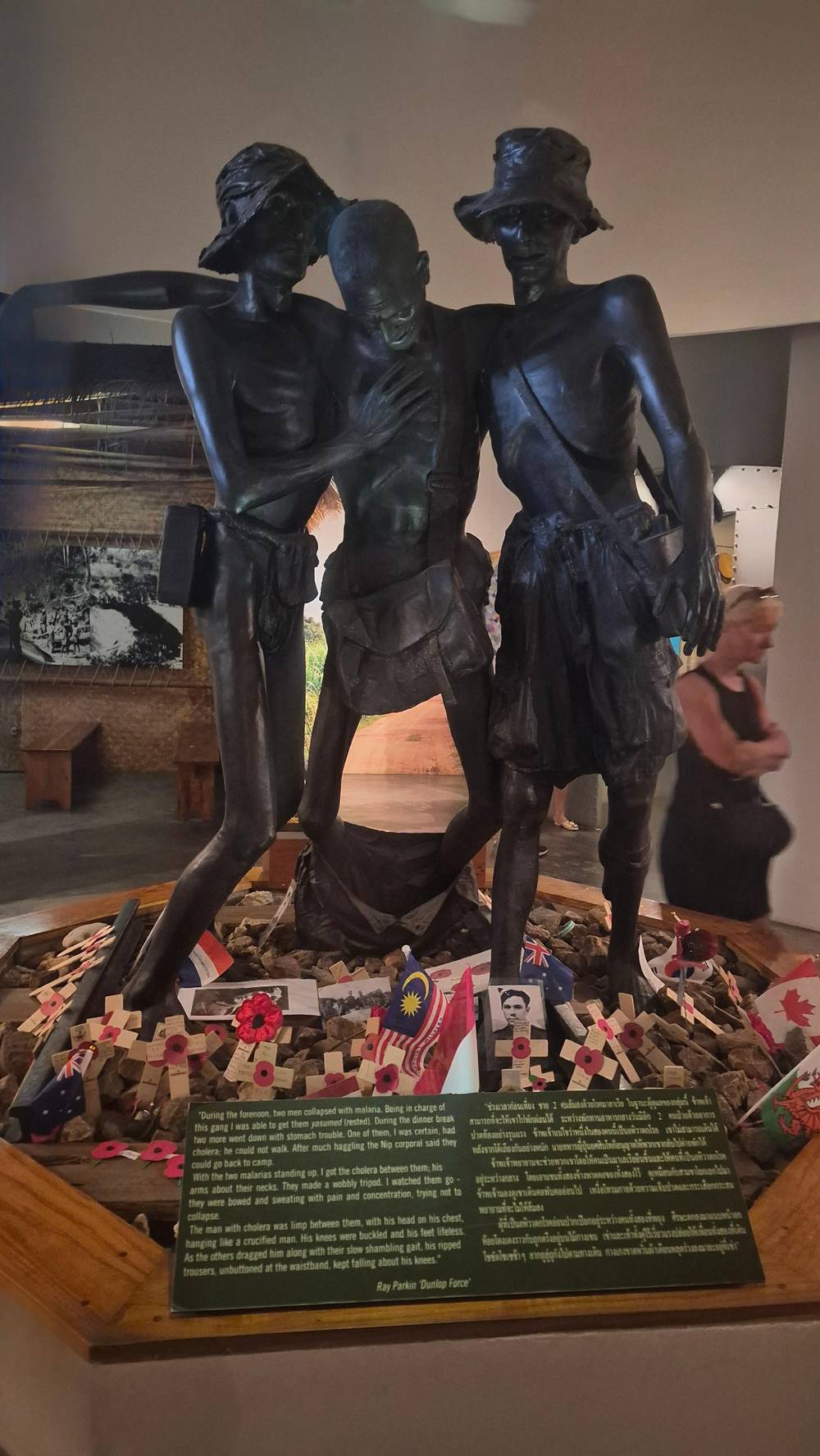
Kanchanaburi has several museums, among them the JEATH Museum and the Thailand-Burma Railway Centre, which the Anzac Portal places near the Kanchanaburi cemetery.5 The Centre is the attraction's own museum and tells the story in 8 main galleries.12 It is on the western side of the main war cemetery, 1 km from the city centre.22
The Centre opens daily, 9:00am to 4:00pm, and it lists admission at THB 160 for adults and THB 80 for children aged 7 to 12.4 Its most unusual item is a 9 metre long contour model at 1:50,000 scale that shows the route through the River Kwae valley with fibre optic lighting.17 One panel dates the speedo period from March to September 1943.23
Few of the wartime trains survive, and the engines on show by the bridge and at the JEATH Museum come from the postwar years.24 When time allows a single museum, choose the Railway Centre for the overview and the maps. The JEATH and World War II Museum stands near the bridge, so both can share a stop.5
If you book a tour
Enter your group size to see the shared day, the private days and the Erawan combination side by side.
Compare all 4 options
Enter your group size to see the shared day, the private days and the Erawan combination side by side.
≈
View≈
View≈
View≈
ViewStarting prices from GetYourGuide, converted at the ECB reference rate. You will see the exact price when booking.
The bridge through time
Construction
They worked at Tha Markam in 1942 and 1943.1
The raids
Several steel spans were destroyed by raids from December 1944.7
The worst attack
It killed 19 prisoners and wounded 68 on 29 November 1944.8
The film
The 1957 film won 7 Oscars.3
The rename
The town renamed the river Kwae Yai in 1960.9
Today
It sits among market stalls and memorials.10
Kanchanaburi has two Commonwealth War Graves Commission cemeteries, Kanchanaburi, also called Don Rak, and Chungkai.5 The Kanchanaburi War Cemetery lies just off Highway 323, close to the railway station, with the monument to the romusha nearby.13 The Centre's own page gives its Thai name as Pa-cha Angrit and says it is 1 km from the city centre.22
Chungkai War Cemetery lies along the Kwae Noi beyond the edge of town, south-west of the river junction at a distance of a couple of kilometres, and the Chungkai cuttings are about 1 km further on.14 Chungkai has 314 Dutch graves, Kanchanaburi 1,896 and Thanbyuzayat 621.25 Ask the operator which cemetery an itinerary includes, because the shared listing names the Kanchanaburi War Cemetery and Chungkai lies further out of town.
The cemeteries in Kanchanaburi and Chungkai hold the remains of over 2,200 Dutch prisoners.18 A further site, the Thanbyuzayat Allied War Cemetery in Burma, holds the graves of 3,771 prisoners of war and others, 1,335 of them Australians.26 The Japanese also built a memorial in Kanchanaburi in early 1944, and it remains a site of remembrance.15 Visit quietly, dress with respect and avoid walking on the graves.
Video
Gone Adrift on YouTube · Video data is requested only when you tap play.
The plot is entirely fictional, although Nicholson was supposedly based on the British colonel at Tha Markam, Philip Toosey.
Before you go
Tours differ in order, so read the itinerary before you book. The Hellfire Pass memorial museum and walking trail occupies 2 hours on the shared listing, and the town stops are shorter: 40 minutes at the railway museum and 20 minutes at the cemetery. The order also changes how each stop feels, because arriving at a cemetery after a hot walk is different from arriving fresh.
The Hellfire Pass site says the Centre is about 80 km from Kanchanaburi town and the drive takes about an hour on Highway 323.6 If you travel independently you can reverse the order, and ride the train to Nam Tok first, about 20 km from the Centre, and then continue by road.27 That plan needs a driver or a taxi, which you should confirm before you set off.
Whichever order you choose, leave the cemetery for a time when you are not rushed. The town half is the quieter, slower half, and it works best when you give each stop its own attention. The 20 minutes on the shared listing is enough for a respectful walk along the rows but not for reading names, so if a name matters to you, plan a longer visit or a separate morning.
Some Erawan waterfalls, Death Railway and River Kwai tour listings add the national park to the day. A listing spends a van of 3 hours, the River Kwai bridge, a van of 1 hour, Erawan National Park and a van of 3 hours back. The park is a different kind of day, and it has its own guide on another site in this network, so it is only mentioned here.
A combination trades history for scenery. The Erawan day includes the bridge but not the museums or the cemeteries in the listing's stops, while the shared pass listing covers both the pass and the town sites. If your priority is the story of the railway, pick the pass and the museums. If you want a swim and a walk, an Erawan combination fits better.
Check the stops, not the title. A listing can name the River Kwai in its title and spend only a short photo stop there. Compare the itineraries, the length of the day, whether the guide speaks your language and whether the booking is private or shared. The calculator below takes your group size and lays the from-prices out side by side.
FAQ
Kanchanaburi (Don Rak) and Chungkai are the Commonwealth War Graves Commission cemeteries.5
The Centre lists THB 160 for adults and THB 80 for children aged 7 to 12.4
A listing runs a 12 hour day with the bridge and Erawan National Park.
TAT puts the trip at around 3 hours by the daily train and bus services.16
Sources
Planning a day at Hellfire Pass? Ask a real person here.