Where is your stop
What is Hellfire Pass? The cutting and its trail
View 14 stops
The Death Railway on the map
Choose a route and tap a pin or stop to see its note and open it in Google Maps.
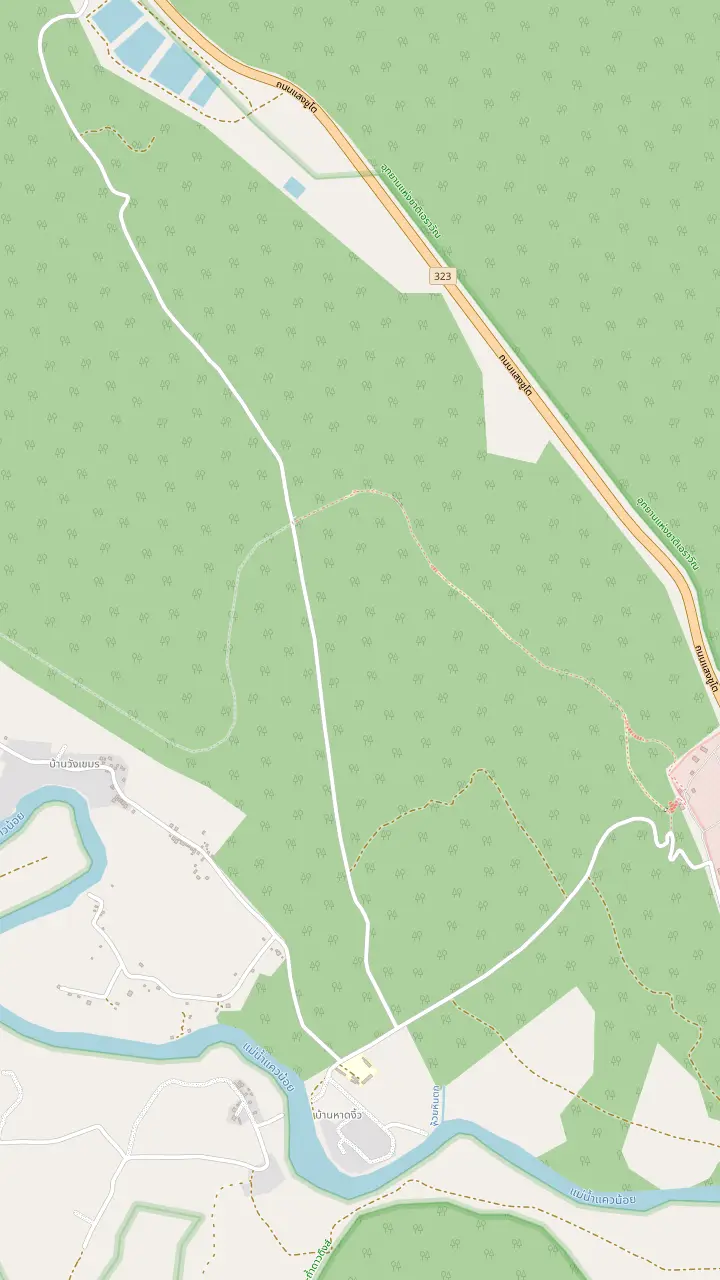
The Konyu Cutting, where the memorial trail begins beside the Interpretive Centre.
Google MapsThe site of a wartime camp on the river below the cuttings, further along the line.
Google MapsThe village near the end of the memorial trail, on the road north of the pass.
Google Maps
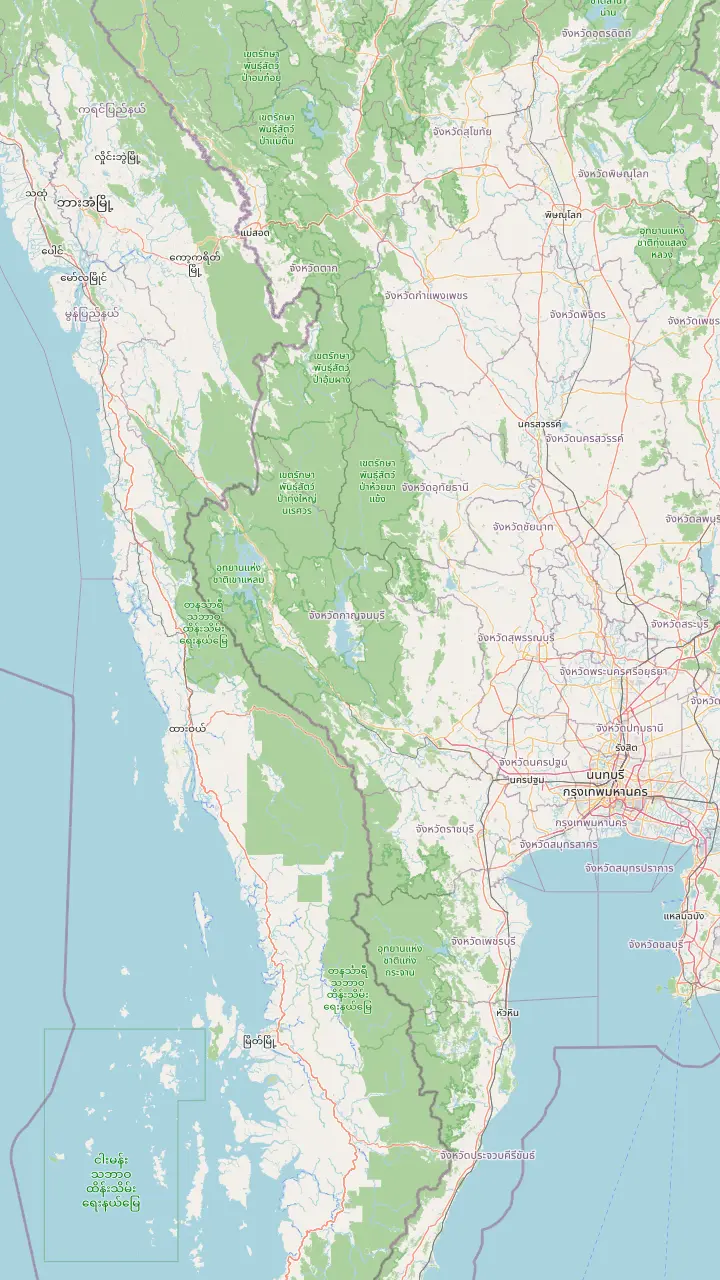
Where the Death Railway leaves the Thai main line.
Google MapsThe town station, a short walk from the war cemetery and the railway museum.
Google MapsThe steel bridge over the Khwae Yai, with the town's wartime museum beside it.
Google MapsThe timber viaduct hugging the cliff above the Khwae Noi, known in wartime as Wampo.
Google MapsThe end of the line that still runs, where the tourist trains turn round.
Google MapsThe Konyu Cutting, where the memorial trail begins beside the Interpretive Centre.
Google MapsThe border crossing in the Tenasserim hills, far beyond the working line.
Google Maps
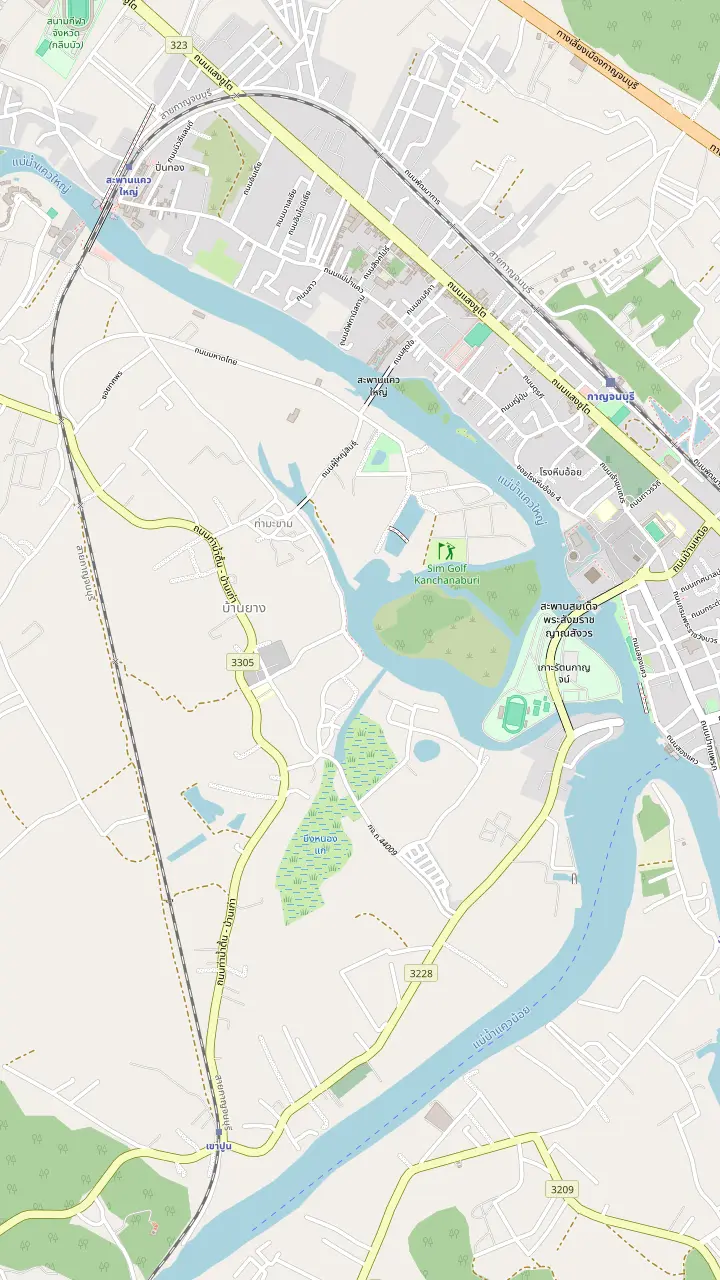
The steel bridge over the Khwae Yai, with the town's wartime museum beside it.
Google MapsThe museum on Maenam Khwae Road a few steps from the bridge.
Google MapsThe town station, a short walk from the war cemetery and the railway museum.
Google MapsThe Thailand-Burma Railway Centre, on the west side of the war cemetery.
Google MapsThe Commonwealth cemetery at Don Rak, beside Saeng Chuto Road.
Google MapsThe cemetery on the Khwae Noi, laid out on the site of a wartime camp and hospital.
Google Maps
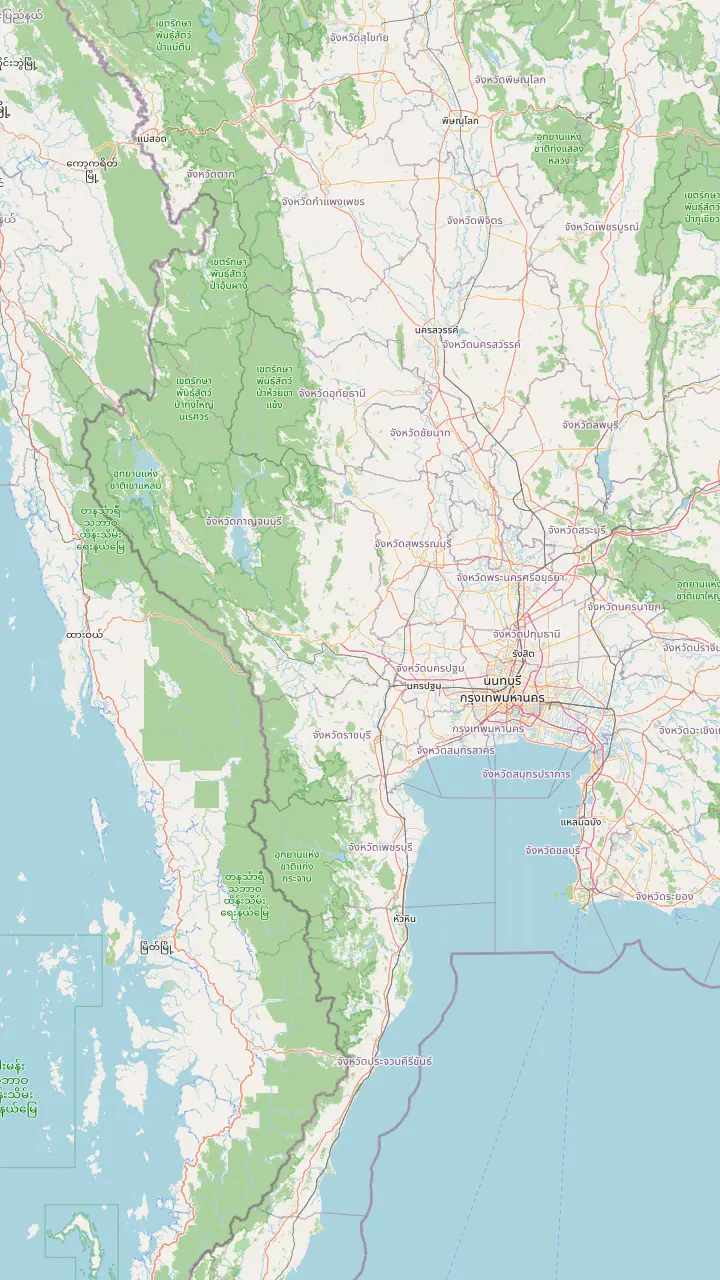
Bangkok Noi, the Thonburi terminus of the Nam Tok trains.
Google MapsWhere the Death Railway leaves the Thai main line.
Google MapsThe town station, a short walk from the war cemetery and the railway museum.
Google MapsThe steel bridge over the Khwae Yai, with the town's wartime museum beside it.
Google MapsThe end of the line that still runs, where the tourist trains turn round.
Google MapsThe Konyu Cutting, where the memorial trail begins beside the Interpretive Centre.
Google Maps
Map data: © OpenStreetMap contributors
Hellfire Pass is the Konyu Cutting on the Thai side of the Burma-Thailand Railway, cut by hand through solid rock. Here is how big it is, why it has that name, who worked there and what a visit looks like today.
Editorial team, hellfirepasstour.quest · Updated November 12, 2026 · 7 min reading time
Main facts
- The placeA rock cutting 75 metres in length that reaches 25 metres in depth.1
- The nameTorch-lit night shifts looked like a scene from hell.2
- The workStarted on Anzac Day, 25 April 1943, with hammers and chisels.3,4
- The trailA memorial walk along the old rail bed to the Hintok Cutting.5
- The visitIndividuals are welcomed without bookings during opening hours.6
Hellfire Pass: a rock cutting that became a memorial
Hellfire Pass is the name prisoners gave to the Konyu Cutting, a deep notch through solid rock on the Thai side of the Burma-Thailand Railway. That railway ran 415 km from Nong Pladuk to Thanbyuzayat and was built to supply Japanese forces in Burma.7 Anyone who asks what is Hellfire Pass is really asking about a short stretch of that line, the place where the route met a ridge that had to be cut through instead of walked around.
At its highest point the cutting reaches a depth of 25 metres, over a length of 75 metres.1 Those figures look modest on paper, and they feel larger from the bottom of the walls, because every metre was drilled, blasted and cleared by hand.8 The audio guide at the site calls the place Konyu Cutting and says it is now known as Hellfire Pass, which is why you will see both names on maps and signs.
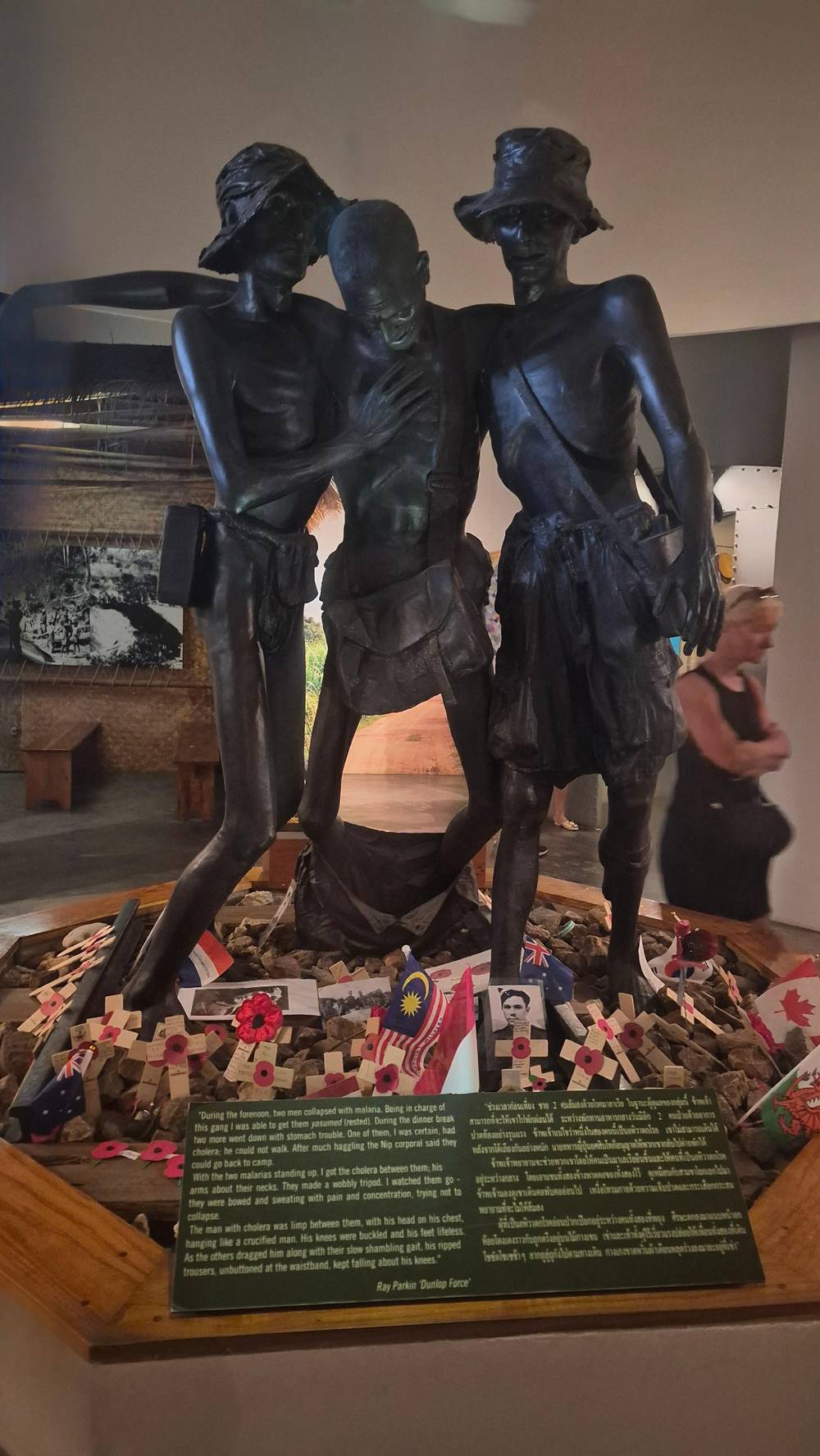
The name comes from the night shifts. Sick, starving men working by torchlight looked like a scene from hell, and that image stuck.2 Bamboo torches and smoky fires gave the light for that work.9 Today the cutting is quiet, shaded and green, and it is kept as a memorial rather than a sight to be photographed from a car window.
Official sources side by side
Hellfire Pass at a glance
| Topic | What the source says | Source |
|---|---|---|
| Size of the cutting | Length 75 metres, depth 25 metres at the highest point1 | Audio guide |
| Start of work | Anzac Day, 25 April 19433 | Interpretive Centre |
| Worst period | From July to August 1943, shifts of 12 to 18 hours10 | Interpretive Centre |
| Worst period, other dating | March to September 194320 | Railway Centre |
| Death rate here | 8 to 10 per cent higher than elsewhere on the line21 | Interpretive Centre |
| Centre opened | 199813 | Interpretive Centre |
Where official sources differ on the speedo dates, both are shown with their source.20
Why the railway needed a cutting here
A rail link between Burma and Thailand was not a Japanese idea. It had been proposed decades before the war, and the British surveyed a route in the 1880s but did not build it.14 Japanese engineers surveyed the route more than once before the army committed to it in June 1942, relying on prisoners of war.15
The reason was logistics. Sea routes to Burma had become vulnerable, so the army wanted a land route.16 A railway wants a gentle gradient, and where the hills could not be avoided the builders dug cuttings so the line could carry on, often emerging from a deep cutting onto embankments and bridges. Hellfire Pass is the deepest example on the stretch that visitors can walk.
Work on this section started on Anzac Day, 25 April 1943.3 That date is also the day of the dawn service held at the pass each 25 April.17 Overall, work on the railway started in October 1942 and ended on 16 October 1943.18 The cutting therefore belongs to the final months of the build, a period the speedo section below describes.
Who worked on the line
Prisoners by origin
- British30000
- Dutch, Indonesian18000
- Australian13000
- American680
The Hellfire Pass site lists 30000 British, 18000 Dutch and Indonesian, 13000 Australian and 680 American prisoners on the railway.19
Who cut the rock and with what tools
Allied prisoners of war numbering above 60,000 worked on the railway, about 13,000 of them Australian, with roughly 200,000 romusha, Asian labourers, beside them.26,27 The memorial site breaks the prisoner total down by origin, and the chart below uses its figures: British, Dutch and Indonesian, Australian and American prisoners all cut, carried and built on the same line.19
The tools were basic, and the work was slow for that reason. Men broke through solid rock with hammers and chisels.4 The audio guide describes the work in stages. A crew exposed the rock and the hammer and tap men came next, with a drill held by a man while another struck it.28 The rock rollers then carried the sharp-edged rubble away in bare feet.29
Power tools arrived near the end of the excavation but soon broke, so the finish came by hand as well.30 Bamboo was both the main resource and a hazard, because clearing thickets cut flesh and led to tropical ulcers.31 You can still see the marks of the work on the walls, and the audio guide points to a broken drill bit that has sat in the rock since 1943.32
Plan your visit
How to see Hellfire Pass
Pick the way that matches your time, fitness and interest in the history.
If I want the cutting and the trail on foot
Visit on your own
Individuals are welcomed without bookings during opening hours.6
If I have a single day from Bangkok
A day tour
A listing here spends 2 hours at the memorial and trail and adds the train and the bridge.
If I want the story before I travel
Read the audio guide online
The transcript is published in separate parts for each walk.22
If I want to be there on Anzac Day
Go for the dawn service
The site opens at 3.00 AM and the service starts at 5.30 AM.23
If I am not sure about the heat or the climbs
Start early and carry water
The Centre warns of steep climbs, rough terrain and intense sun.24,25
The speedo months and what they cost
The pass became a bottleneck, because cutting rock by hand is slow. Japanese engineers answered by forcing teams to work around the clock.38 The Hellfire Pass site dates the worst period from July, when shifts of 12 to 18 hours with no rest day began, and says it lasted until the section was finished in August 1943. Prisoners called this period speedo.10
The Thailand-Burma Railway Centre dates the speedo period differently, from March to September 1943, and says most deaths occurred then.20 The official sources disagree on the dates, so treat them as a range rather than a single window. Both agree on the pattern: pressure to finish, long shifts and very little rest. Shifts could run up to 18 hours a day under the threat of violence.39
The Hellfire Pass site gives a death rate here that was 8 to 10 per cent higher than on other parts of the railway.21 For the line as a whole the same site gives far larger totals of prisoner and romusha deaths, which the history guide on this site sets out.19 Some survivors reckoned a life was lost for each sleeper laid.40 The figures are given as the memorial gives them, and they are estimates.
If you go with a guide
Price a Hellfire Pass day for your group
Change the group size to see what a shared day and a private day with the pass would cost.
Compare all 2 options
Price a Hellfire Pass day for your group
Change the group size to see what a shared day and a private day with the pass would cost.
- Day tour with lunchFrom Bangkok · price per person from $79
≈
View - Private, with the passFrom Bangkok · from only $161
≈
View
Starting prices from GetYourGuide, converted at the ECB reference rate. You will see the exact price when booking.
A short history of the cutting
From blasting to memorial
The start
Work begins on the cutting
It began on Anzac Day 1943 on the section that includes the pass.3
The speedo months
Shifts around the clock
Teams worked 12 to 18 hours from July, with no rest day.10
The finish
The section is complete
The Hellfire Pass section was finished in August 1943.10
The long silence
Abandoned for decades
The terrain and the memories kept people away.11
The return
Former prisoners come back
They rediscovered the pass in the 1980s.12
The memorial
The Interpretive Centre opens
It was officially opened in 1998.13
Walking the cutting today on a Hellfire Pass visit
A Hellfire Pass visit starts at the Interpretive Centre, from where the walk goes down stairs and a pathway and then along the rail bed to the memorial.41 Walkers who want more can continue a further 2 kilometres toward the site of Hintok Camp.41 The memorial trail follows the alignment of the original railway from the pass through to the Hintok Cutting.5
The ground is rougher than the stairs suggest. The Centre warns that the trail has steep climbs and rough terrain and asks visitors to judge their own fitness.24 On the walk toward Hintok Road there is very little shelter, with steep climbs and descents, and in the wet season uneven ground and running water.37 Sturdy shoes with ankle support and slip-resistant soles are the top item to pack.33
Heat is the other issue. Bring enough water, drink regularly and cover up against the sun.34,25 Insect repellent is on the Centre's list too.35 The Centre lists its hours as 09:00 to 16:00, and individuals do not need to book.36,6 An audio guide, published as a transcript in separate parts, covers the walk to the memorial and the walk to Hintok Road.22
Video
A virtual walk along the Hellfire Pass trail
Explore TBR on YouTube · Video data is requested only when you tap play.
The name ‘Hellfire Pass’ comes from the sight of the sick, starving men who worked by torchlight, which resembled a scene from hell.
Before you walk
A checklist for the trail
After the war: abandoned, rediscovered, remembered
After World War II parts of the railway, Hellfire Pass included, were abandoned. Hard terrain and sad memories kept visitors away, and for decades nobody touched the site.11 In the 1980s former prisoners and adventurous tourists rediscovered the pass, and their stories showed why the site needed preserving.12
The Hellfire Pass Interpretive Centre was officially opened in 1998.13 It turned a half-forgotten cutting into a place with a visitor building and a marked trail. The Anzac Day dawn service has been held at the pass every 25 April since 1998 and draws visitors from around the world.17 On that day the site opens at 3.00 AM, the public are asked to be seated by 5.00 AM and the service starts at 5.30 AM.23
Attendance shows how far the place has come from its years in the jungle. The Centre and walking trail welcomed more than 166,000 visitors in 2025.42 If you are travelling in late April, plan around the dawn service, which is a commemoration before it is a visit, and arrive in good time. On an ordinary day a morning visit means fewer people on the narrow parts of the trail and better shade before midday.
Cannot travel? Follow the pass from home
The official site of the Hellfire Pass Interpretive Centre carries the history of the cutting and the railway, a page on the human cost and an Anzac Day page, all written by the Australian Government. It is the closest thing to a Hellfire Pass virtual tour that the memorial itself offers, and it is worth reading before a visit, not only as a substitute.
The audio guide transcripts are published online in separate parts. Part One follows the walk to the memorial and Part Two the walk to Hintok Road.22 Read them with the map of the Death Railway on this page and you can place each stop: the rail bed at the bottom of the stairs, the cutting, the plaque to a surgeon, the broken drill bit and the stretch toward Hintok.32
If the real thing is on your list, the practical route is a day trip from Bangkok. A listing on this site spends 2 hours at the memorial museum and walking trail, after a van ride of 3.5 hours each way into the hills, and adds a train ride of 1.5 hours and the River Kwai bridge. That day suits readers who want the history and the walk without arranging transport.
FAQ
Quick questions get quick answers.
What is Hellfire Pass?
It is the Konyu Cutting, a cut 75 metres in length and up to 25 metres in depth, now a memorial with an Interpretive Centre.1
Why is it called Hellfire Pass?
The name comes from the sight of sick, starving men working by torchlight, which looked like a scene from hell.2
When did work on the cutting start?
Work on this section began on 25 April 1943, and the pass was finished in August 1943 after the speedo months.10
How far can you walk beyond the cutting?
Is there a Hellfire Pass virtual tour?
The Centre's website carries the history, the human cost and the audio guide transcripts, which together let you follow the walk from home.22
Do I need to book to visit?
Is there a service at Hellfire Pass on Anzac Day?
Sources
- Australian Government, Department of Veterans' Affairs · Hellfire Pass Interpretive Centre Audio Guide ↩
- Hellfire Pass Interpretive Centre (Australian Government, DVA) · Hellfire Pass History ↩
- Hellfire Pass Interpretive Centre (Australian Government, DVA) · Hellfire Pass History ↩
- Hellfire Pass Interpretive Centre (Australian Government, DVA) · Hellfire Pass History ↩
- Hellfire Pass Interpretive Centre (Australian Government, DVA) · Hellfire Pass Interpretive Centre, Thailand ↩
- Hellfire Pass Interpretive Centre (Australian Government, DVA) · Planning your trip ↩
- DVA Anzac Portal (Australian Government) · Burma-Thailand Railway and Hellfire Pass ↩
- Australian Government, Department of Veterans' Affairs · Hellfire Pass Interpretive Centre Audio Guide ↩
- Australian Government, Department of Veterans' Affairs · Hellfire Pass Interpretive Centre Audio Guide ↩
- Hellfire Pass Interpretive Centre (Australian Government, DVA) · Hellfire Pass History ↩
- Hellfire Pass Interpretive Centre (Australian Government, DVA) · Hellfire Pass History ↩
- Hellfire Pass Interpretive Centre (Australian Government, DVA) · Hellfire Pass History ↩
- Hellfire Pass Interpretive Centre (Australian Government, DVA) · Hellfire Pass History ↩
- DVA Anzac Portal (Australian Government) · Hellfire Pass (Konyu Cutting) ↩
- DVA Anzac Portal (Australian Government) · Hellfire Pass (Konyu Cutting) ↩
- DVA Anzac Portal (Australian Government) · Hellfire Pass (Konyu Cutting) ↩
- Hellfire Pass Interpretive Centre (Australian Government, DVA) · Anzac Day at Hellfire Pass ↩
- DVA Anzac Portal (Australian Government) · Hellfire Pass (Konyu Cutting) ↩
- Hellfire Pass Interpretive Centre (Australian Government, DVA) · The Human Cost ↩
- Thailand-Burma Railway Centre · Centre Facilities ↩
- Hellfire Pass Interpretive Centre (Australian Government, DVA) · Hellfire Pass History ↩
- Australian Government, Department of Veterans' Affairs · Hellfire Pass Interpretive Centre Audio Guide ↩
- Hellfire Pass Interpretive Centre (Australian Government, DVA) · Anzac Day at Hellfire Pass ↩
- Hellfire Pass Interpretive Centre (Australian Government, DVA) · Planning your trip ↩
- Hellfire Pass Interpretive Centre (Australian Government, DVA) · Planning your trip ↩
- DVA Anzac Portal (Australian Government) · Hellfire Pass (Konyu Cutting) ↩
- DVA Anzac Portal (Australian Government) · Hellfire Pass (Konyu Cutting) ↩
- Australian Government, Department of Veterans' Affairs · Hellfire Pass Interpretive Centre Audio Guide ↩
- Australian Government, Department of Veterans' Affairs · Hellfire Pass Interpretive Centre Audio Guide ↩
- Australian Government, Department of Veterans' Affairs · Hellfire Pass Interpretive Centre Audio Guide ↩
- Australian Government, Department of Veterans' Affairs · Hellfire Pass Interpretive Centre Audio Guide ↩
- Australian Government, Department of Veterans' Affairs · Hellfire Pass Interpretive Centre Audio Guide ↩
- Hellfire Pass Interpretive Centre (Australian Government, DVA) · Planning your trip ↩
- Hellfire Pass Interpretive Centre (Australian Government, DVA) · Planning your trip ↩
- Hellfire Pass Interpretive Centre (Australian Government, DVA) · Planning your trip ↩
- Hellfire Pass Interpretive Centre (Australian Government, DVA) · Anzac Day at Hellfire Pass ↩
- Hellfire Pass Interpretive Centre (Australian Government, DVA) · Planning your trip ↩
- Australian Government, Department of Veterans' Affairs · Hellfire Pass Interpretive Centre Audio Guide ↩
- Hellfire Pass Interpretive Centre (Australian Government, DVA) · Hellfire Pass History ↩
- Hellfire Pass Interpretive Centre (Australian Government, DVA) · The Human Cost ↩
- Australian Government, Department of Veterans' Affairs · Hellfire Pass Interpretive Centre Audio Guide ↩
- Hellfire Pass Interpretive Centre (Australian Government, DVA) · Hellfire Pass Interpretive Centre ↩