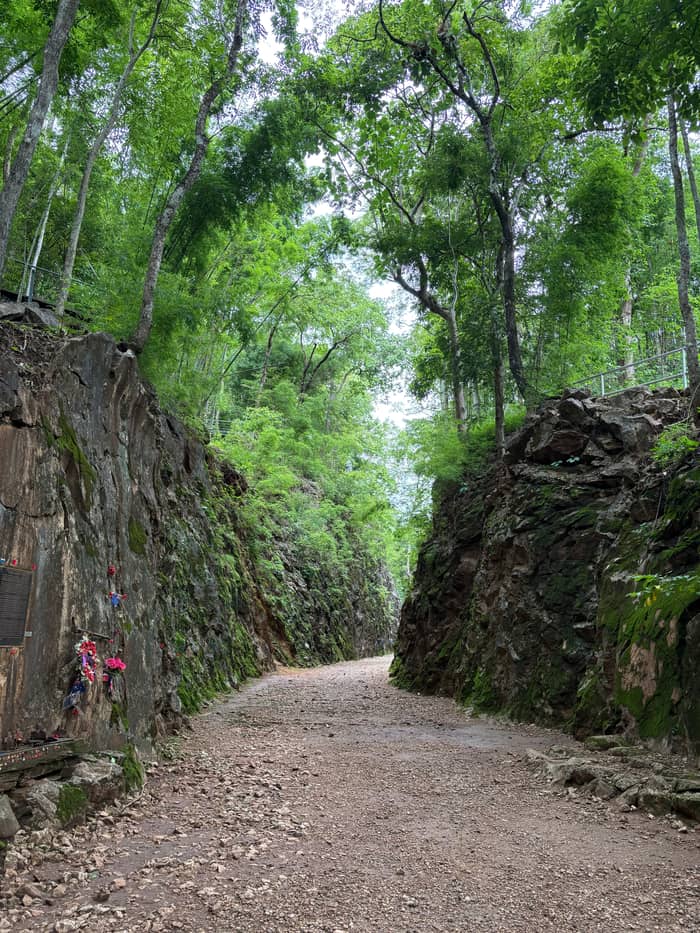
Still in use
The running line
Nong Pladuk to Nam Tok
See the optionsWhere is your stop
The short version
The Death Railway is the Burma-Thailand Railway, built by prisoners of war and Asian labourers for Japan, and it has that name because so many of them died building it.
Railway essentials
View 14 stops
Choose a route and tap a pin or stop to see its note and open it in Google Maps.
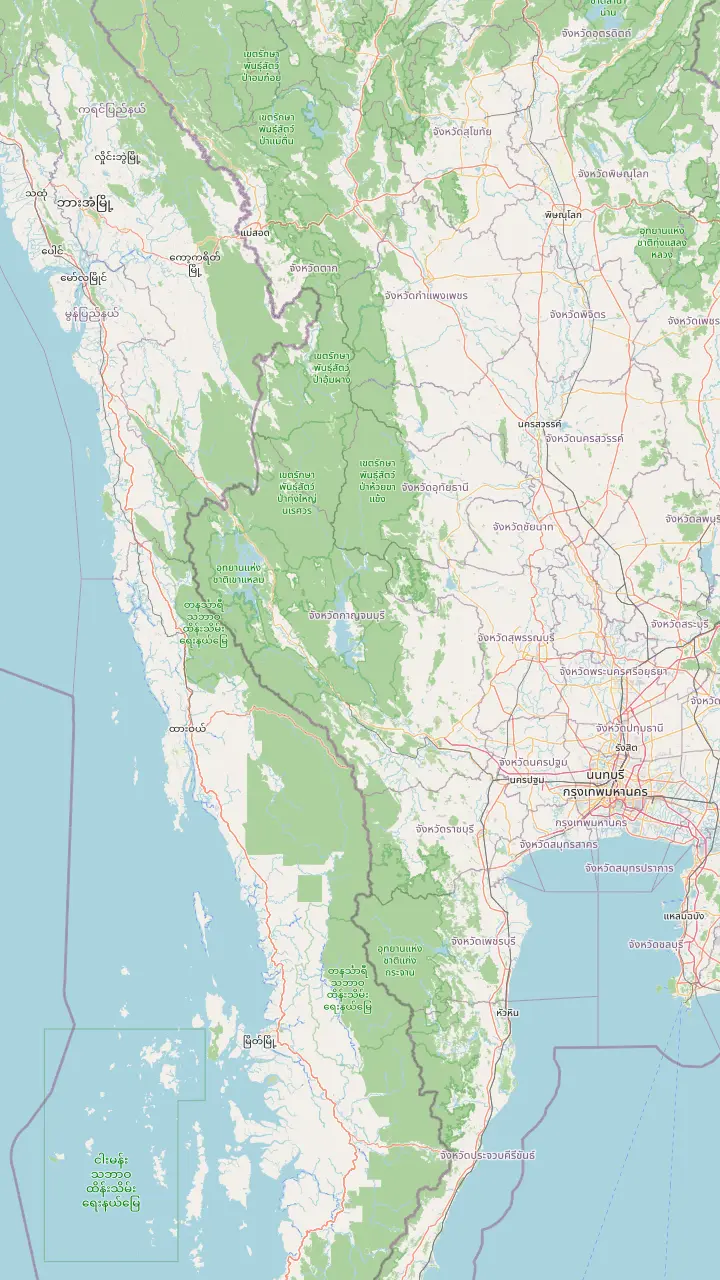
Where the Death Railway leaves the Thai main line.
Google MapsThe town station, a short walk from the war cemetery and the railway museum.
Google MapsThe steel bridge over the Khwae Yai, with the town's wartime museum beside it.
Google MapsThe timber viaduct hugging the cliff above the Khwae Noi, known in wartime as Wampo.
Google MapsThe end of the line that still runs, where the tourist trains turn round.
Google MapsThe Konyu Cutting, where the memorial trail begins beside the Interpretive Centre.
Google MapsThe border crossing in the Tenasserim hills, far beyond the working line.
Google Maps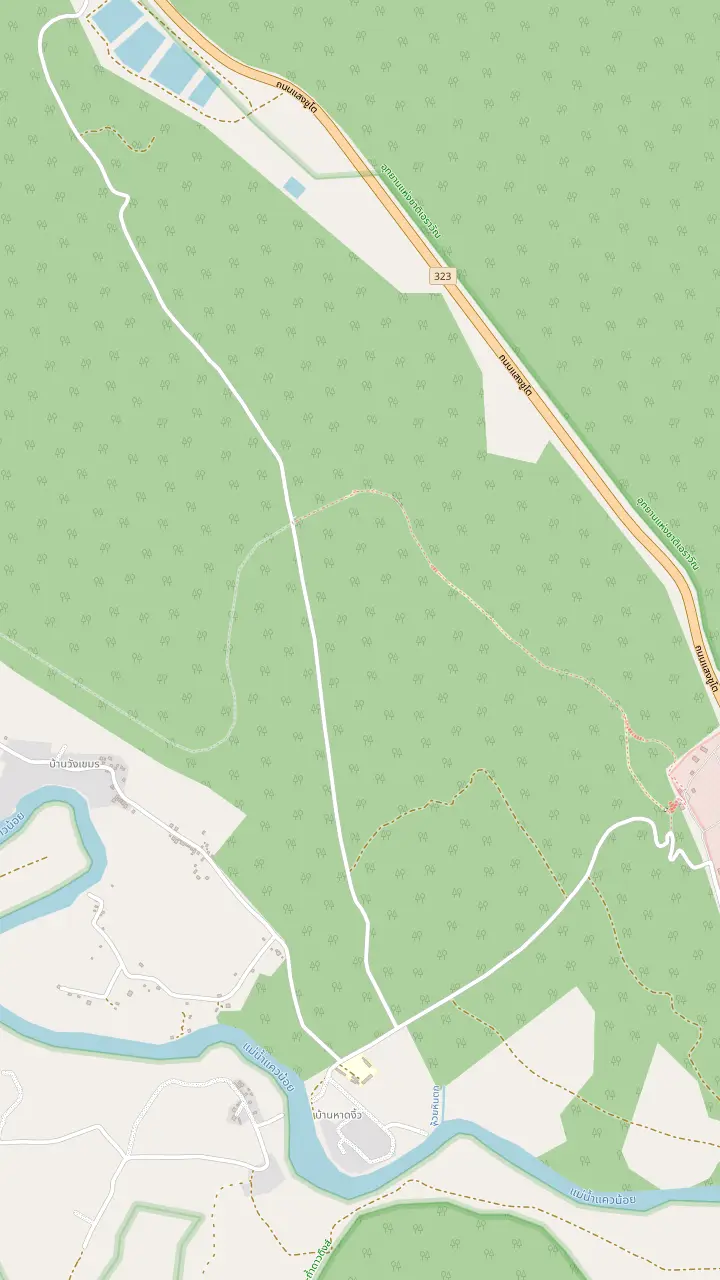
The Konyu Cutting, where the memorial trail begins beside the Interpretive Centre.
Google MapsThe site of a wartime camp on the river below the cuttings, further along the line.
Google MapsThe village near the end of the memorial trail, on the road north of the pass.
Google Maps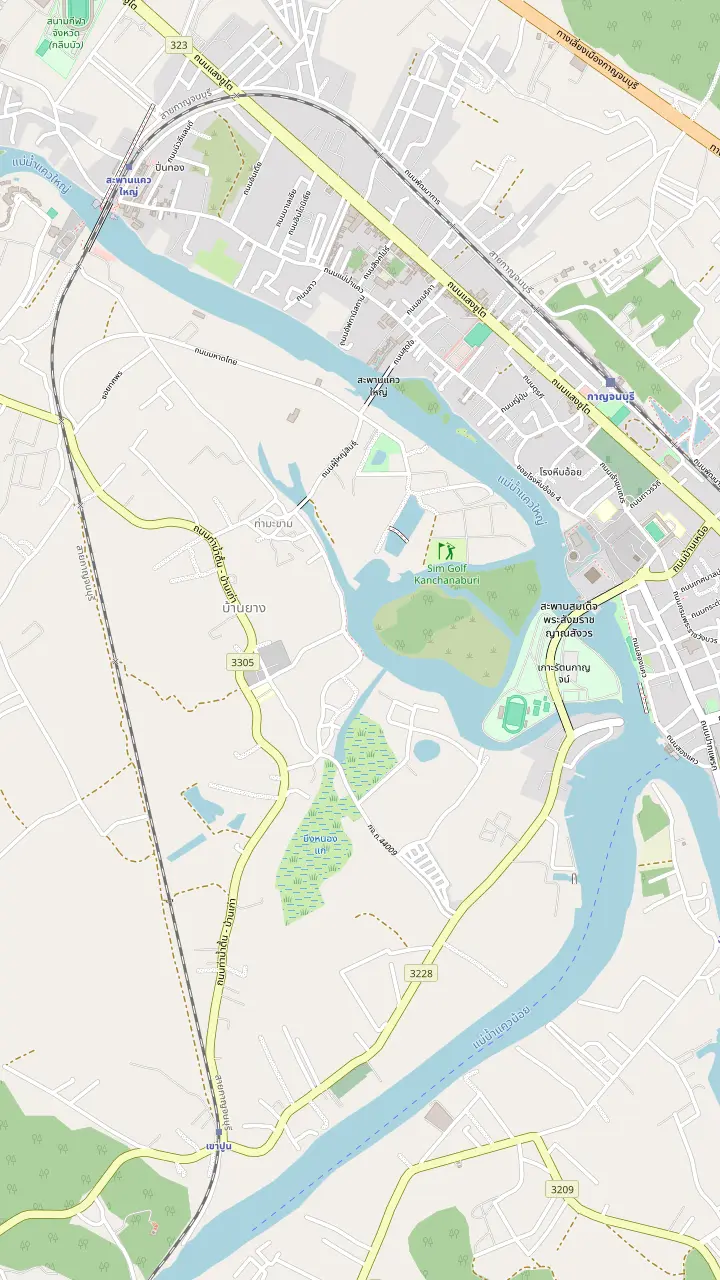
The steel bridge over the Khwae Yai, with the town's wartime museum beside it.
Google MapsThe museum on Maenam Khwae Road a few steps from the bridge.
Google MapsThe town station, a short walk from the war cemetery and the railway museum.
Google MapsThe Thailand-Burma Railway Centre, on the west side of the war cemetery.
Google MapsThe Commonwealth cemetery at Don Rak, beside Saeng Chuto Road.
Google MapsThe cemetery on the Khwae Noi, laid out on the site of a wartime camp and hospital.
Google Maps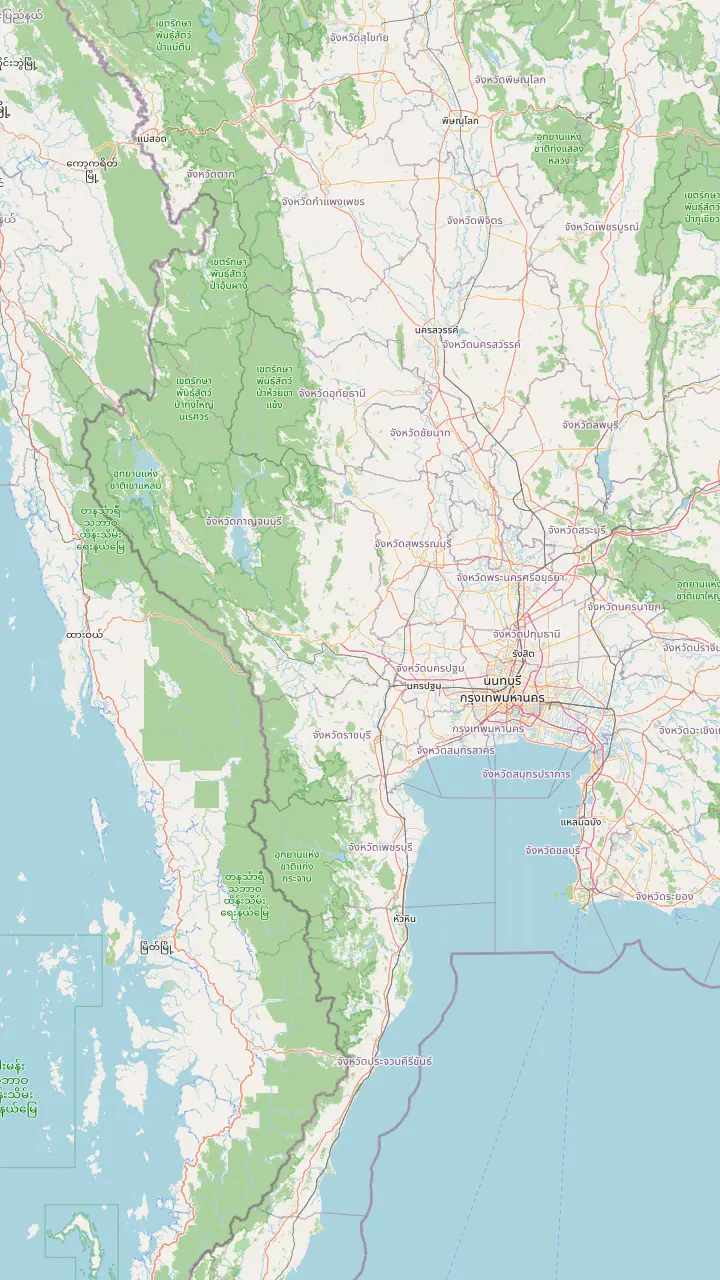
Bangkok Noi, the Thonburi terminus of the Nam Tok trains.
Google MapsWhere the Death Railway leaves the Thai main line.
Google MapsThe town station, a short walk from the war cemetery and the railway museum.
Google MapsThe steel bridge over the Khwae Yai, with the town's wartime museum beside it.
Google MapsThe end of the line that still runs, where the tourist trains turn round.
Google MapsThe Konyu Cutting, where the memorial trail begins beside the Interpretive Centre.
Google MapsMap data: © OpenStreetMap contributors
The Death Railway was a 415 km line between Thailand and Burma, built by prisoners of war and Asian labourers. This is what it was for, how it was built, where the name comes from and which stretch still carries trains.
Editorial team, hellfirepasstour.quest · Updated November 12, 2026 · 7 min reading time
Main facts
People who ask what is the Death Railway are usually trying to place a name they have seen on a tour board or in a film. It is the Burma-Thailand Railway, a 415 km line that linked Non Pladuk, west of Bangkok, with Thanbyuzayat in Burma, now Myanmar.6 The Japanese built it to give their forces in Burma weapons, supplies and reinforcements.6
The workforce was drawn from prisoners and labourers. More than 60,000 Allied prisoners of war worked on it, and the Japanese enticed or coerced about 200,000 Asian labourers, the romusha.2,3 The official name, the Burma-Thailand Railway, is neutral, while the nickname Death Railway sums up the toll that later sections set out.
The line was not built in a single place. The Thai and Burmese halves were laid at the same time, from Nong Pladuk in Thailand and from Thanbyuzayat in Burma.7 They met in October 1943.8 Today the railway is both a working line in Thailand and a memorial landscape, with cuttings, bridges, museums and cemeteries scattered along it.
The line, stretch by stretch
| Stretch | What happened | Source |
|---|---|---|
| Whole line | 415 km, begun October 1942, completed on 16 October 19431 | Anzac Portal |
| Both ends | Built together from Nong Pladuk and Thanbyuzayat7 | Railway Centre |
| Bridges | 688 bridges and more than 60 stations19 | Anzac Portal |
| Nong Pladuk to Nam Tok | 130 km reopened in 19575 | Anzac Portal |
| Tha Khanun to Sonkurai | Under the Vachiralongkorn Dam since 198520 | Anzac Portal |
| Burma side | Torn up after the war21 | Anzac Portal |
All entries come from the Australian Government's Anzac Portal and the Thailand-Burma Railway Centre.7,21
By mid-1942 sea routes to Burma had become vulnerable, and the Japanese army wanted a safer way to move men and supplies.14 A land link through the hills between Thailand and Burma was the answer, and it let the army avoid the sea lanes altogether.14 Once finished, the railway was meant to support an attack on the British in India.6
The idea was older than the war. The British colonial authorities in Burma raised a rail link through Thailand in the 1880s.9 The British surveyed a possible route in that decade, and the link was not built.15 The Japanese surveyed the project in the 1920s and again in early 1942.10
A pre-war Japanese survey estimated that the job would take 5 years, and the Anzac Portal says the actual work took about 15 months.16 That gap is the backdrop to the speedo months described on the Hellfire Pass page. The decision to go ahead came in June 1942, and it rested on a large workforce of Allied prisoners of war already in Japanese hands.10
Work began at Thanbyuzayat in Burma on 1 October 1942, and construction at the Thai end started almost at once at Banpong, which lies around 150 kilometres south-east of the pass.11,30 Japanese engineers estimated 4 million cubic metres of earthworks, 3 million cubic metres of rock and 14 kilometres of bridges along the 415 kilometres of line.31
The scale was large, and it is worth keeping in mind when you see only a short stretch from a train window. The project included 688 bridges and more than 60 stations.19 The workforce laid an average of 890 metres of track every day.32 Hellfire Pass, for example, was drilled, blasted and cleared by hand, which is why cuttings feature so heavily in the story.25
The railway was finished far faster than a pre-war survey had expected.16 The Anzac Portal gives both 15 months and 12 months on its pages, while the Thailand-Burma Railway Centre says actual construction took 16 months.16,33,8 The figures are shown as the sources give them. All agree the line was complete in October 1943, and the Government gives the date as 16 October 1943.1
Follow the story
The railway left sites at both ends of the Thai line; pick by what you want to understand.
If I want to stand in a cutting
Hellfire Pass
A cutting blasted out of the rock by hand.25
If I want to see a museum with maps
The Railway Centre
It has 8 main galleries and a 9 metre contour model of the route.26,27
If I want to ride part of the line
Kanchanaburi to Nam Tok
The section is popular with tourists and passes the Wampo viaduct.22
If I want to see where the dead rest
The Kanchanaburi cemeteries
The town has 2 Commonwealth War Graves Commission cemeteries.28
If I want a single day that covers it
A day tour from Bangkok
A listing combines the pass, a train ride and the bridge.
Fates of the line
Still in use
Nong Pladuk to Nam Tok
See the options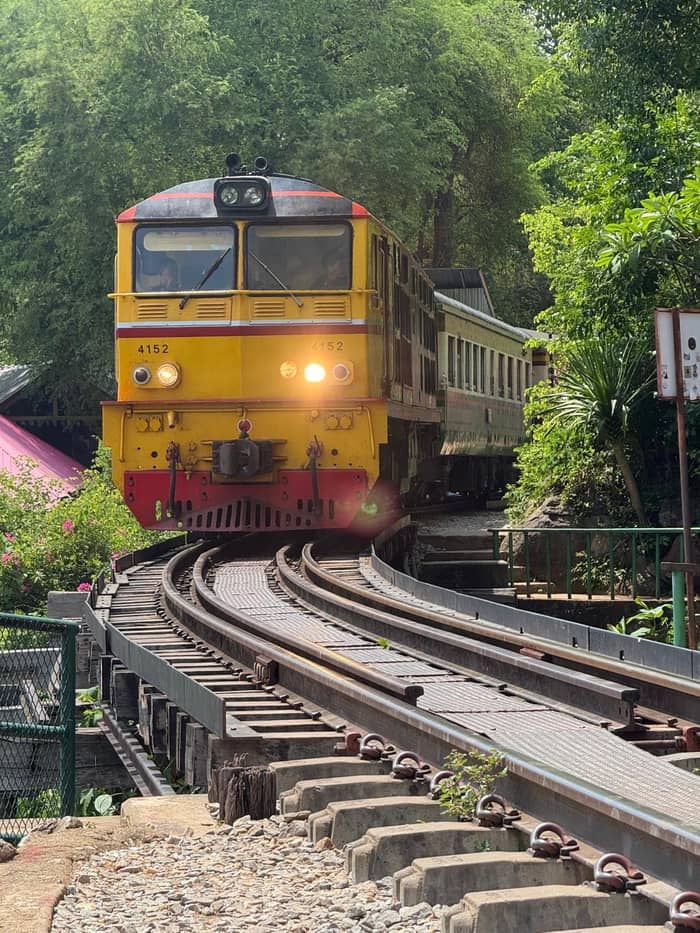
Under water
Tha Khanun to Sonkurai
See the options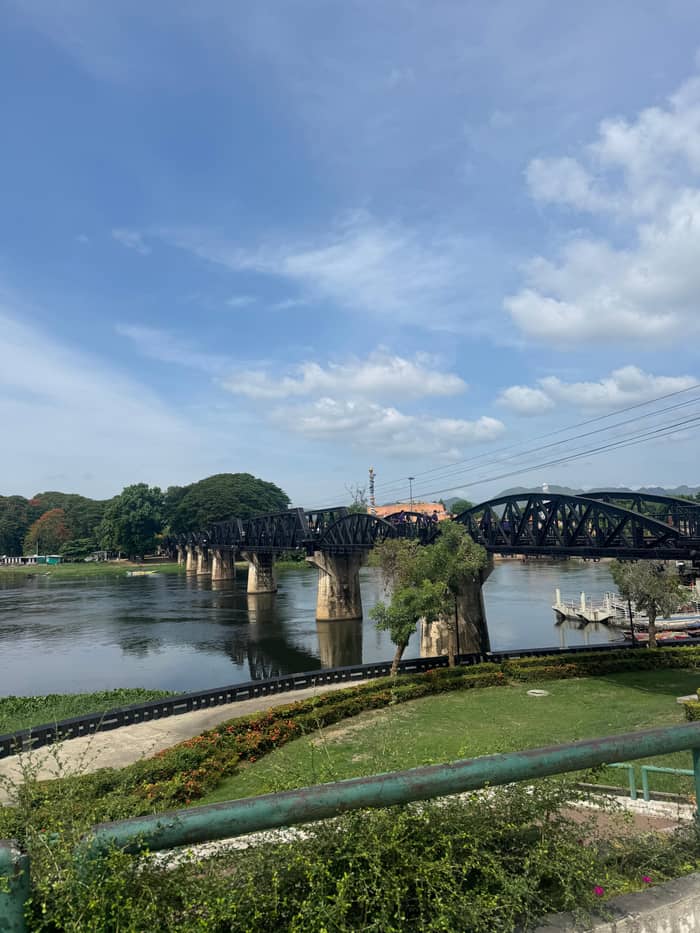
Torn up
Thanbyuzayat and beyond
See the optionsThe halves of the railway met at Konkoita in late October 1943. At a ceremony a Japanese general hammered a gold spike into an ebony sleeper, and a locomotive then ran over the join, marking the line as complete.12 The Thailand-Burma Railway Centre also puts the joining near Konkoita in October 1943.8 Once linked, the halves formed a single line of 415 km from Nong Pladuk to Thanbyuzayat.1
The railway then went to work. From November 1943 to March 1944 more than 50,000 tonnes of food and ammunition travelled to Burma, along with 2 complete divisions that went to take part in the Japanese offensive into India.40 Despite repeated Allied bombing the railway kept running as a fully functioning line after its completion.41
The operation had its own details. Hintok station, around 3 km from Hellfire Pass, was a passing loop on the line, and the clearing for its turning loop is still visible.42 The Anzac Portal counts 142 trains on the line at the outset, with around 100 still operating by the war's end.43 The line was a working railway, not just a labour camp with rails.
If you book a tour
Add your group size and see the from-prices for tours covering the railway, shared or private.
Compare all 3 options
Add your group size and see the from-prices for tours covering the railway, shared or private.
≈
View≈
View≈
ViewStarting prices from GetYourGuide, converted at the ECB reference rate. You will see the exact price when booking.
From idea to memorial
Early proposals
A Burma-Thailand link was proposed in the 1880s and shelved.9
The decision
The decision to go ahead came in June 1942.10
Construction starts
Thanbyuzayat started on 1 October 1942.11
The meeting
Track-laying parties met at Konkoita in late October 1943.12
The sale
The Thai Government bought it in 1947.13
The reopening
Nong Pladuk to Nam Tok reopened in 1957.5
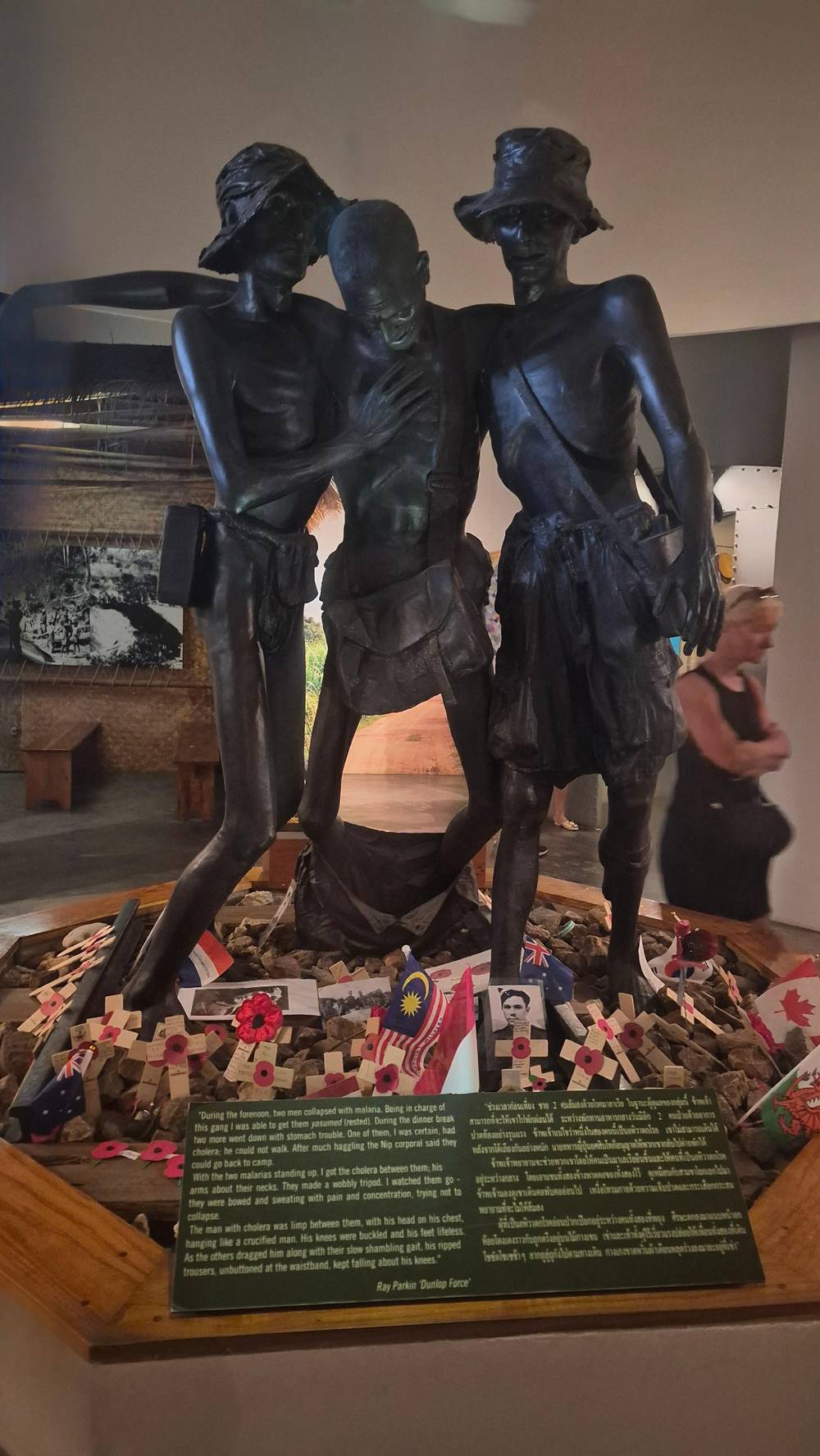
Why is it called the Death Railway? Because of the people who died building it. The Hellfire Pass site lists 12,000 Allied prisoners and 90,000 romusha who died during construction.17 The Anzac Portal puts it as one in 5 Allied prisoners and almost half the romusha, and notes that of about 13,000 Australians who worked on the line, 2,700 did not return.4
Other official figures differ. The Tourism Authority of Thailand puts the toll at nearly 16,000 prisoners of war and possibly as many as 100,000 Asian labourers.18 The Thailand-Burma Railway Centre says some 240,000 is the most reliable estimate of the number of Asian labourers who worked on the line.44 The chart below sets the death counts side by side, and the gaps are real: no single count has been agreed.
Survivors had their own measure of the cost. Survivors' rule of thumb was a death for each sleeper.29 The Centre dates the worst months, called speedo, from March to September 1943 and says that is when most deaths occurred.45 Read the numbers as estimates that point to the same fact, the scale of the loss.
Video
Timeline - World History Documentaries on YouTube · Video data is requested only when you tap play.
Some survivors suggested that one life was lost for every sleeper laid.
Before you go
The prisoners were organised into groups called forces. The groups in Thailand included Dunlop Force, D Force, F Force and H Force, and A Force and others were in Burma.46 More than 60,000 Allied prisoners worked on the line, and they came from Britain, the Netherlands East Indies, Australia and the United States.17
The romusha were Burmese, Chinese, Javanese, Malay and Tamil people, and the Government says the Japanese enticed or coerced about 200,000 of them to work on the line.3 By the Government's count they were the larger part of the workforce, about 200,000 against more than 60,000 prisoners.2,3 The Thailand-Burma Railway Centre notes that most railway labourers came from Burma, Java and Malaya.44
Local people had a role too. The Anzac Portal records that a Kanchanaburi trader, Boonpong, smuggled food and medicine to the prisoners; his wartime house stands at 96 Pak Prak Road, and his family keeps a small museum there.47 The same source records a memorial that the Japanese built in Kanchanaburi in early 1944 to the Allied prisoners who died on the railway, which remains a site of remembrance.48
Is the Death Railway still in use? Partly. By 1947 the Allies decided to tear up the Burma side and sell the Thai part to the Thai Government for GBP 1.5 million.21 In 1957 Thailand reopened a 130 km section between Nong Pladuk and Nam Tok, with a feeder line to Sai Yok Noi waterfall, and that section still serves the local community.5
Only about one-quarter of the railway, in Thailand, was ever reopened, which is why the stretch that runs today feels short against the full 415 km.49,1 Beyond Nam Tok much of the route is invisible, lost beneath farmland and jungle.23 A large portion between Tha Khanun and Sonkurai has been under the Vachiralongkorn Dam since 1985.20 It is unlikely that the full railway will ever be restored.24
Visitors can ride the part that survives. Tourists favour the stretch that starts at the River Kwai bridge and ends at Nam Tok, which goes through the 2 Chungkai cuttings and over the Wampo viaduct.22 The Wampo viaduct on that section was cut into a cliff by prisoners and heavily repaired after the war.50 The tourist train deserves its own guide, and the practical details, from tickets to which side to sit on, are covered on the train page of this site.
FAQ
It linked Nong Pladuk in Thailand with Thanbyuzayat in Burma and was built by prisoners of war and Asian labourers for Japan.6
The Anzac Portal says one in 5 Allied prisoners and almost half the romusha died.4
Tourists ride the stretch between the bridge and Nam Tok.22
Sources
Planning a day at Hellfire Pass? Ask a real person here.